
Custom Retail Software Development for Unified Commerce Operations
Teamvoy provides custom retail software development for systems that keep inventory, orders, and customer data consistent across store, web, and mobile. We take ownership from architecture and integrations through deployment and production operations.
Trusted by engineering teams at:














Teamvoy has helped retail teams at EverBlock, Market Access Direct, and 150+ other companies connect their online and in-store operations, cut manual work, and deliver a shopping experience that actually keeps customers coming back.

Verified B2B client reviews from fintech, insurance, healthcare, and hi-tech engagements.

A B2B review platform that connects businesses with verified software solutions providers.

Transparent platform where current and former employees share company reviews and interview experiences.
What Is Custom Retail Software Development?
Custom retail software development is the practice of building a retailer's operational systems around how that retailer actually trades, rather than configuring a packaged platform to approximate it. It becomes the right choice where stock allocation, pricing or fulfilment logic is a competitive decision the platform cannot express.

What Our Clients Say
The care and interest they showed are what makes Teamvoy special. The system contributes to company sales, which is the best metric of success. Teamvoy was excellent in terms of project management and were extremely responsive while coming up with creative solutions.

Arnon Rosan, CEO & Founder, EverBlock Systems, LLC
Teamvoy has successfully launched the system within the set timeline and integrated all the required tools and features. The collaborative team led regular meetings, delivered on time, and communicated effectively. Their proactive problem-solving approach and commitment to innovation stand out.

Jim Hill, Director of Marketing & Business Development, Market Access Direct, LLC
Teamvoy’s support and expertise have been integral in helping the client build and scale their product. An agile partner, they manage their tasks well and are consistent in delivering according to schedule. Their strong understanding of blockchain and the quality of their work make them stand out

Gordon Little, Managing Director, Iress
The game had a huge impact on the client’s business and helped display the exhibition. Teamvoy utilizes project management tools to ensure a smooth workflow. The team us understanding, hard-working, and experienced.

Dr. Christian Stein, CEO, MeinObject
We work with them for over 2 years, and they have been very reliable and timely in providing us quality development services. Their creative input and talented team helped us build a better product!

Nazar Fedorchuk, CEO & Founder, Senstone
Our featured retail projects

Building a Powerful Web Application for Quote Automation and CAD Generation
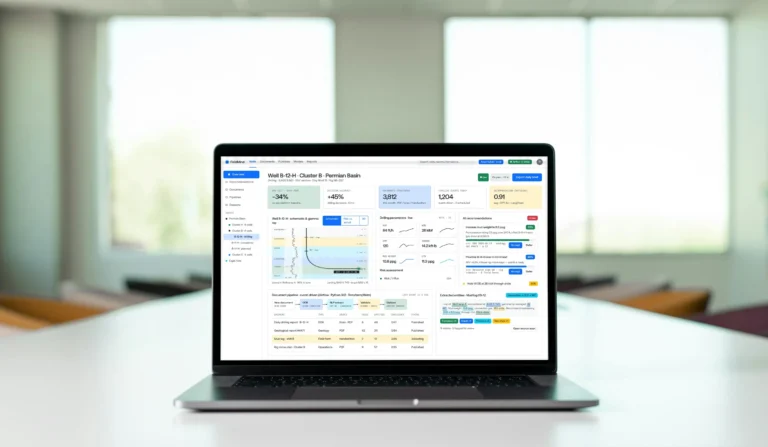
AI in Oil and Gas: 34% Lower Ops Costs, +45% Decision Accuracy for a Global Operator

End-to-End Development of a Web-Based 3D Configurator
What Custom Retail Software Development Actually Changes
- Stock allocation across channels
- Order routing and fulfilment
- AI implementation for forecasting and operational decisions
- One inventory record across store, web and mobile, so availability is accurate when you promise it
- Routing rules you own and can change without waiting on a vendor’s roadmap
- AI integrated into existing retail workflows using your operational data and business rules

What Do Retail Software Development Services Include?
Retail software development services cover four things: architecture, the build, integration with what is already running, and operation once it is live. These are the six engagements they break into.
System Integration
We connect POS, ERP, order management and the commerce layer so one system holds the inventory record and the rest read from it. The integration map comes before any code.
IT Audit
We assess an existing retail estate and return the integration map, the systems that duplicate a record, the peak load each carries, and the compliance scope, including PCI DSS.
Technology Modernization
Retail technology deployment runs in increments that each reach production, moving systems off on-premise hardware so the store estate keeps trading through the migration.
Data Intelligence
We build the pipelines and the model that demand forecasting and store-level reporting read from, so the numbers a merchandiser sees reconcile with the numbers finance closes on.
Cost Optimization
We reduce what the estate costs to run by consolidating duplicated systems and right-sizing infrastructure against real peak load rather than a figure provisioned three years ago.
Product Development
We build inventory, order management and retail app development projects from the data model up, including the variant handling apparel and grocery catalogues need.
Where Retail Digital Transformation Delivers Measurable Value
Retail digital transformation earns its budget in three measurable places. These are the numbers to hold a custom retail software development build to.

Real-time stock accuracy
One record read by every channel removes the oversell window that overnight sync creates. Measure it as the oversell rate per thousand orders before and after.
Order-to-fulfilment cycle time
Routing decisions made by the system rather than a person compress the time between order and dispatch. Measure it in hours at the median and the 95th percentile.
Peak-load headroom
The system is sized against a stated peak — orders per minute, catalogue reads per second — and tested to it before the season it has to survive.

Talk to a
Retail Software Development Services Expert
How Do You Choose a Retail Software Development Partner?
Choose a retail software development partner that can own architecture, integrations, AI implementation, and production operations, with clear accountability for how the system performs at scale.

Integration Ownership
POS, ERP, payments, and commerce integrations maintained as connected systems change.
Inventory Accuracy
Concurrent updates across store, web, and mobile tested against real operational scenarios.
Production Scalability
Peak orders, catalogue reads, and concurrent traffic tested before production.
AI Implementation
AI applied to forecasting, inventory planning, product discovery, and operational automation where it creates measurable value.
Discover our IT retail expertise
Our talented retail software developers have the skills and industry knowledge to assist with any request.
Supply chain optimization
Supply chain optimization focuses on improving product sourcing, procurement, inventory management, logistics, and distribution. It also involves implementing vendor collaboration tools to enhance planning and coordination. We can evaluate your current IT retail systems within a supply chain, identify automation opportunities, provide detailed reports, and make the needed changes.
ERP and RPA
ERP systems enable centralized management of essential business processes, including finance, inventory, HR, and customer relationships. Meanwhile, RPA allows machines to perform tasks usually handled by humans. Depending on your needs and goals, we can implement these technologies separately or together to enhance your automation capabilities.
Unified commerce implementation
Unified commerce seamlessly integrates all sales channels – online, in-store, and mobile – into a single system and centralizes data management across processes. Our retail tech company is here to implement unified commerce for your business, guiding you through every step, from assessing your current situation and selecting the right technology to launching the system and making further improvements.
Customer experience improvement
Customer experience improvement focuses on increasing buyer satisfaction throughout their shopping journey. This includes implementing CRM systems, using AI algorithms and data analytics to enable personalization, introducing loyalty programs to encourage repeat purchases, and more. We offer any retail IT support needed to integrate solutions that improve customer experience into your business.
Data analytics
Data analytics helps retailers better understand customer preferences, shopping behaviors, and the factors influencing buying decisions. It also allows them to identify market trends and use data-driven insights to optimize operations. Retail IT solutions and services cover all data analytics tasks, from integrating data from different systems into unified storage to implementing the right business intelligence tools.
Connected stores
Connected stores bridge the gap between online and offline shopping experiences with innovative technologies. We can help you implement connected stores within your retail environment. Our team will select the right tech stack, ensure compatibility with your existing systems, establish the infrastructure needed to support greater data flow and connectivity, and develop the necessary IoT applications.
Which Retail Segments We Build For
The engineering differs by how stock moves. Six segments, and what changes in each.
Apparel and fashion
Size, colour and fit variants sit deep in the data model rather than as product tags, because allocation and returns resolve at variant level.
Grocery and food
Short shelf life compresses the forecast cycle to days, and the system has to handle weight-based pricing and substitution at the point of fulfilment.
Department stores
Concessions and multiple owners of stock in one building mean the inventory record has to carry ownership as well as location.
E-commerce
Catalogue scale and read volume drive the architecture, and retail app development work is usually about making the same record fast on mobile.
Big box stores
Order routing across a large store estate is the hard problem, with fulfilment cost and delivery promise pulling in opposite directions.
Specialty retail
Small estates with unusual fulfilment models, where packaged-platform assumptions do not fit.
What Drives the Cost of Custom Retail Software Development?
Four variables move the price of custom retail software development, and they move it more than headcount does. Scoping settles each one before a number exists.
Channel count
Integrate or replace
Compliance scope
Peak load
Three ways to start with Teamvoy
There are three ways to begin, and each starts with a technical conversation. Which one fits depends on how well you already know where the estate is breaking.
Retail Estate Audit
A read of what your POS, ERP, order management and commerce layer actually do to one another: which systems duplicate the inventory record, what peak each carries, and where PCI DSS scope sits. You get an integration map and a written action list.
Sharp Sprint
A fixed two-week sprint with senior engineers and working software at the end – one integration closed, or the first slice of a single inventory record. Best for teams that already know which system to fix first.
15-Min Technical Call
A direct call with a CTO about where stock goes out of sync, what your peak is as a number, and whether a custom build or a platform is the honest answer.
Where AI Belongs in Retail Operations, and Where It Does Not
These four retail technology solutions cover demand forecasting, order routing, catalogue work and pricing rules, the smart retail technology retailers ask about first.
Talk to a Retail Software Development Expert
Unlock the full potential of your business with our retail tech company!