Insurance Marketing Compliance for AI Email: Human Approval Before Send
AI can draft an insurance email in seconds. In a regulated market, that speed is only worth something if the platform still decides what reaches the consumer. Teamvoy built AI email generation on gpt-4.1 for an insurance marketing platform, with an approval flow that keeps every draft under human control. How do you add AI to a compliance workflow without opening a side door around it?
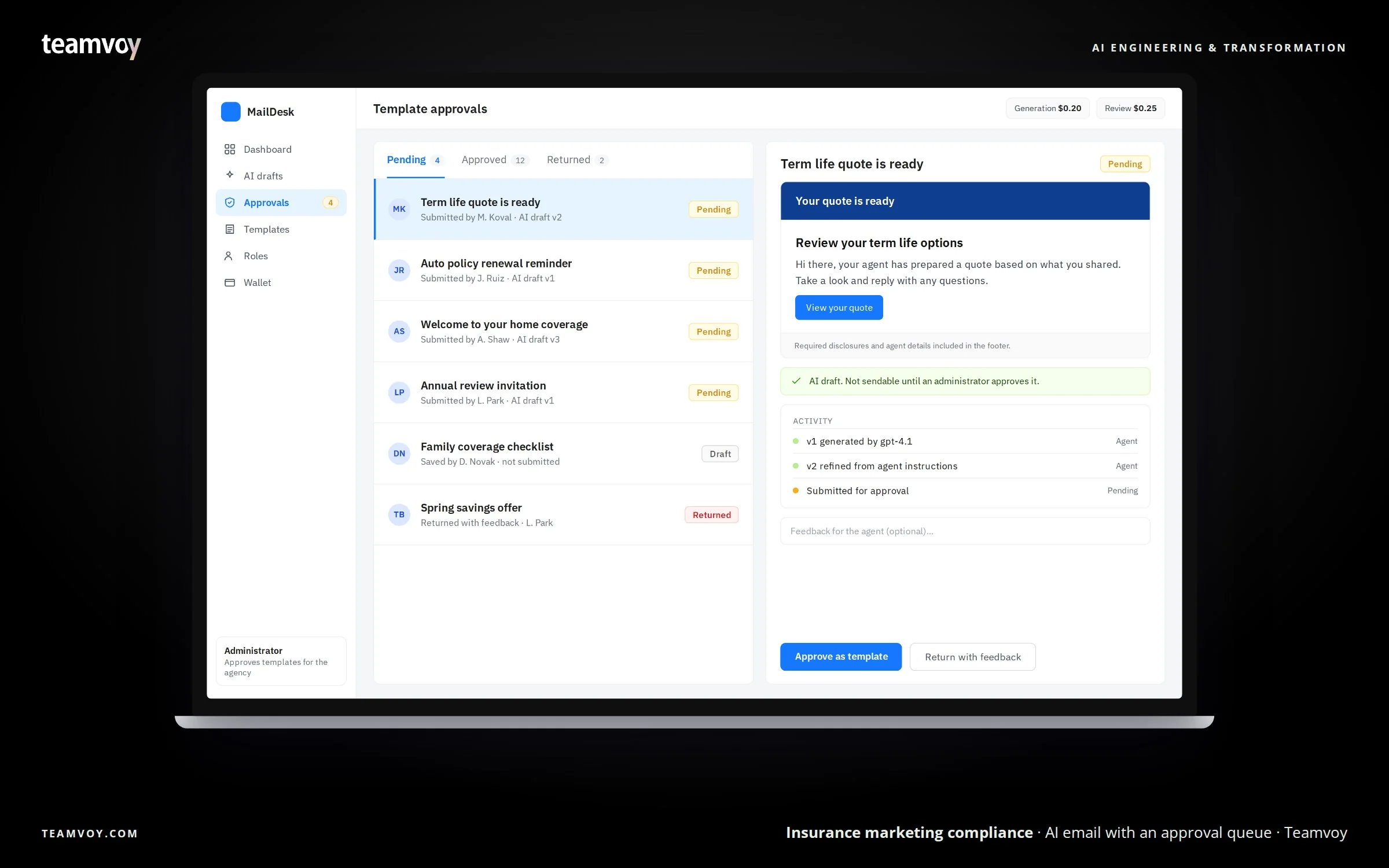
| Project detail | Description |
|---|---|
| Client | An insurance marketing platform used by insurance agents |
| Industry | Insurance marketing technology |
| Status | Production, metered |
| Technology | gpt-4.1, approval queue, draft-state model, role-based auto-approval permission, wallet metering |
| Delivery | Approval queue in month 1, first production tenant in month 4 |
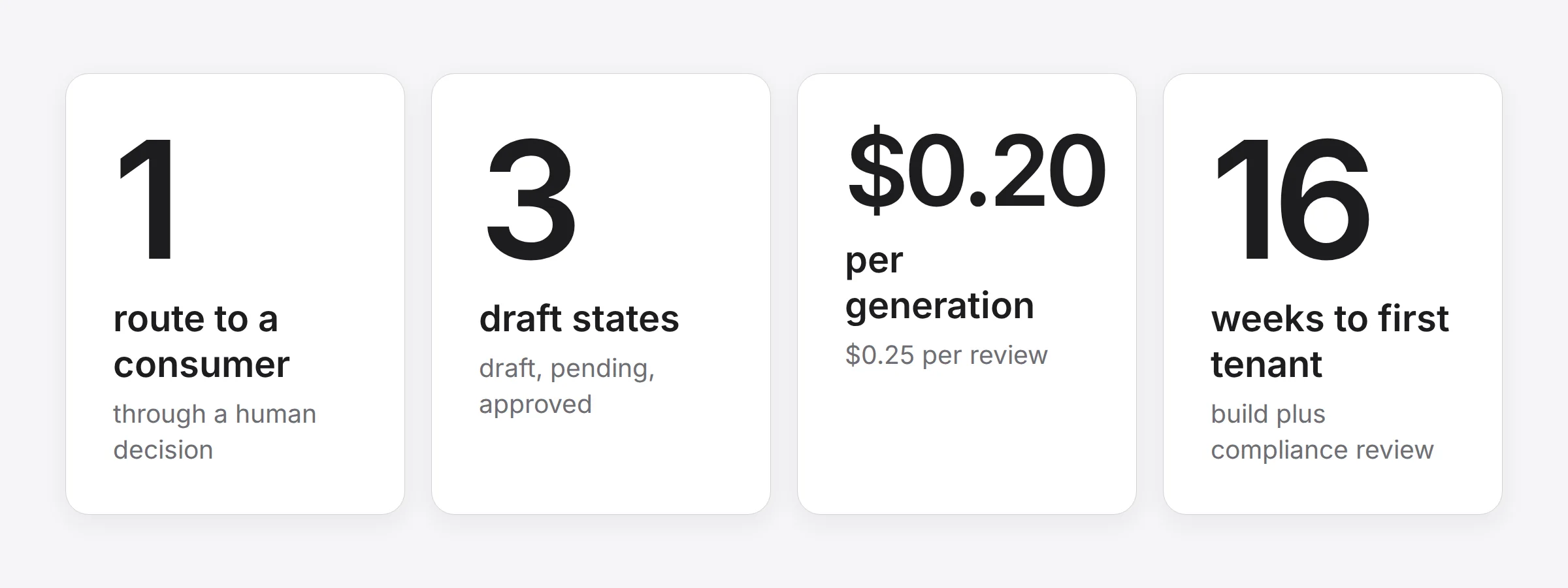
— 1 route to a consumer, 3 draft states, $0.20 per generation, 16 weeks to the first tenant
01. Summary
Insurance marketing email is repetitive work: the same kinds of messages for different products, audiences and offers
That makes the first draft a good fit for AI email generation. The model produces a first version, refines the wording and cuts the time agents spend on routine writing. The value of the feature depends on what happens after that first draft. In insurance, an unreviewed email that reaches a consumer is a compliance problem even when the copy is fine. So the platform needed to connect AI generation to the controls it already relied on, without creating a second path around them.
The usual answer is policy: ask users to review every draft, put the rule in the prompt, and hope the process holds. Teamvoy built the review step into the feature instead. The model handles generation and refinement; the application owns the states, the permissions and the approval logic. AI becomes part of the existing process instead of a tool sitting next to it. This case study shows how the flow works, why the core build took about seven weeks, why the first production tenant went live after sixteen, and how the same feature became a metered product line.
02. Problem
The platform wanted insurance agents to prepare marketing email faster while keeping the same control over what could go into a live campaign.
Generation wasn’t the hard part. The hard part was the point where an AI draft turns into something that can be used.
- No AI-generated copy reaches a consumer without review. The product had to enforce this, not a user remembering a rule or a prompt that keeps behaving.
- Agents needed speed, administrators kept control. Drafting and refinement had to get faster, but the final decision stayed with the person responsible for the communication.
- Exceptions stayed visible. Some trusted users needed more room, and any bypass had to be explicit, tied to a role and easy to audit later.
The platform also wanted to see how the feature was being used across tenants. That meant measuring AI usage per action rather than leaving it inside a shared infrastructure bill. What started as an AI email generation feature became a product problem that combined insurance marketing compliance, workflow design, role-based permissions and usage metering.
03. Solution
How AI Email Generation Moves From Draft to Approved Template
Every AI email follows the same lifecycle. The model creates the content as a draft. When the agent is ready, they submit it and the status changes to pending, which shows the administrator what needs attention and what still belongs to the agent. The administrator approves the email, which turns it into a usable template, or rejects it with feedback. A rejected draft returns to the agent, who can edit it by hand or ask the model to refine it before submitting again. Refinement doesn’t create a new path. An improved version goes back through the same review and stays visible at each stage. The lifecycle stays small, and agents can still use the model repeatedly while they prepare content.
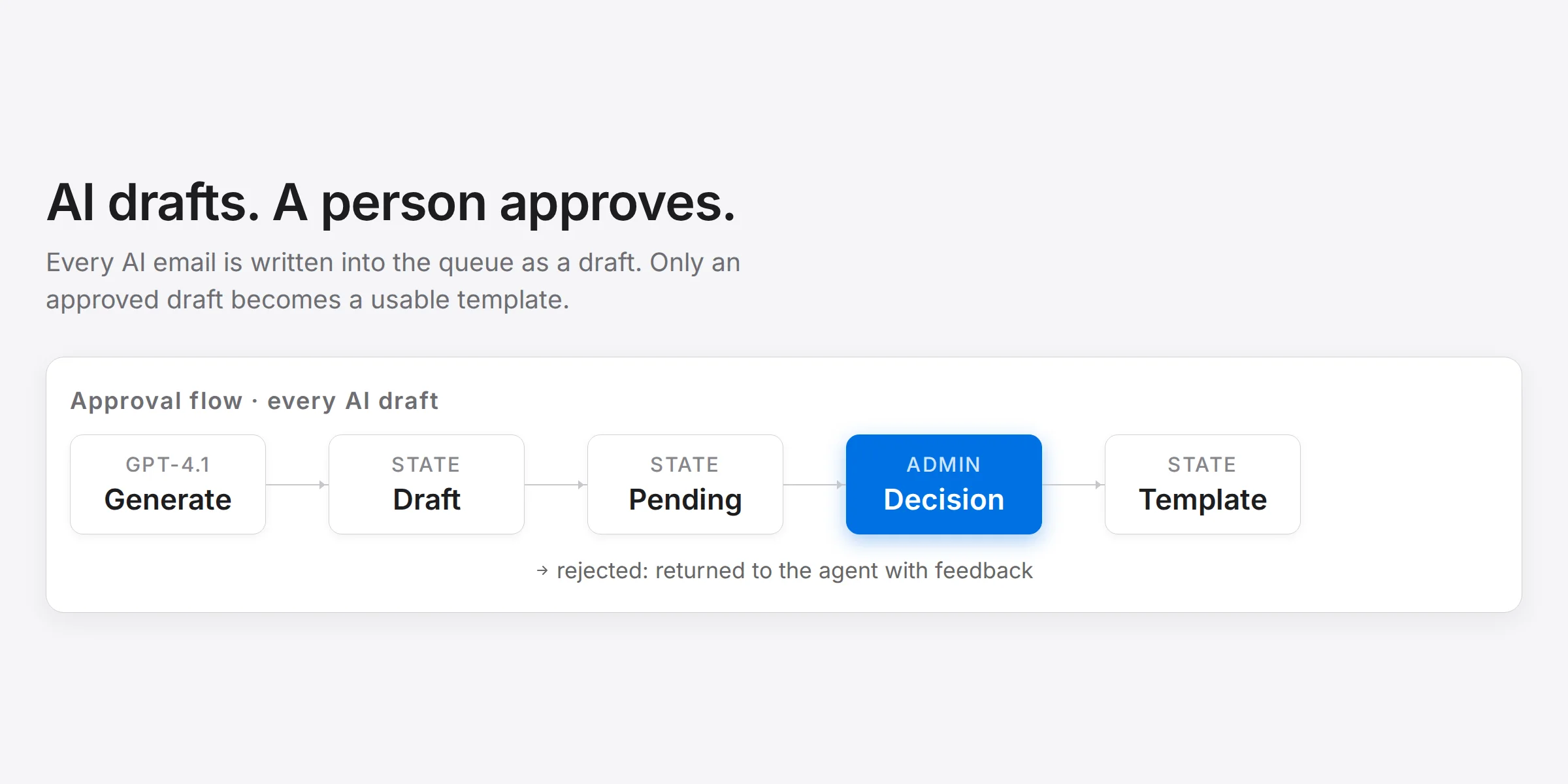
– The approval flow: generate, draft, pending, administrator decision, usable template. Rejection returns the draft with feedback.
The trade-off is a queue. Every AI draft waits for a person, so the feature adds review time to campaigns that used to skip it. The client accepted that because the alternative was an ungoverned send path.
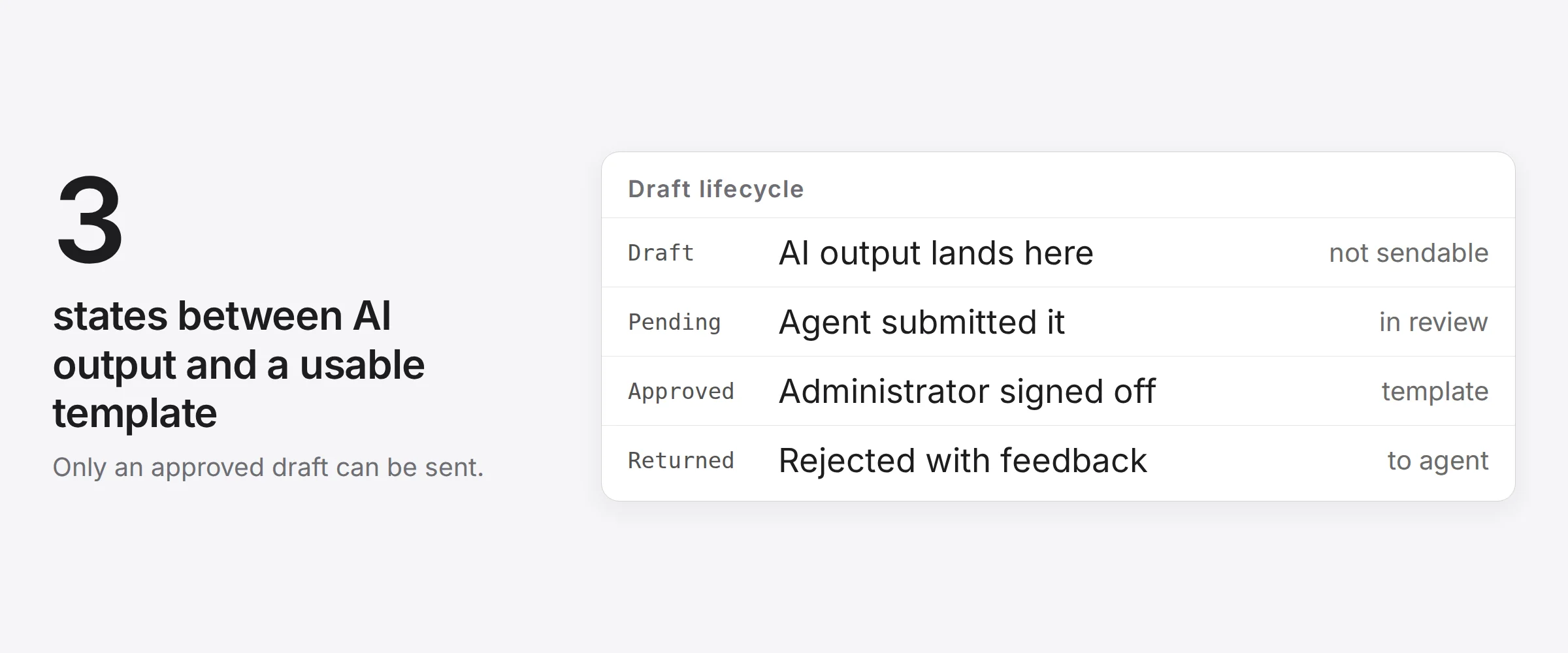
– Three states stand between AI output and a usable template.
Why Human in the Loop AI Is Built Into the Send Path
The main compliance control in this implementation is the workflow, not a prompt instruction or a written guideline. A draft stays a draft until it’s submitted. A pending item stays under review until an administrator decides. Only approved content becomes a usable template. That is a technical boundary between AI copy and communication that is ready to move forward. For a compliance reviewer, the flow is easy to audit because the review point is visible in the product structure rather than hidden inside model behaviour. That’s where human in the loop AI earns its place here. The human step isn’t added after the AI has finished. It is part of the workflow, so responsibility and visibility sit in the same place. For AI generated email compliance, the control stays the same even when the generated wording changes from one request to the next.
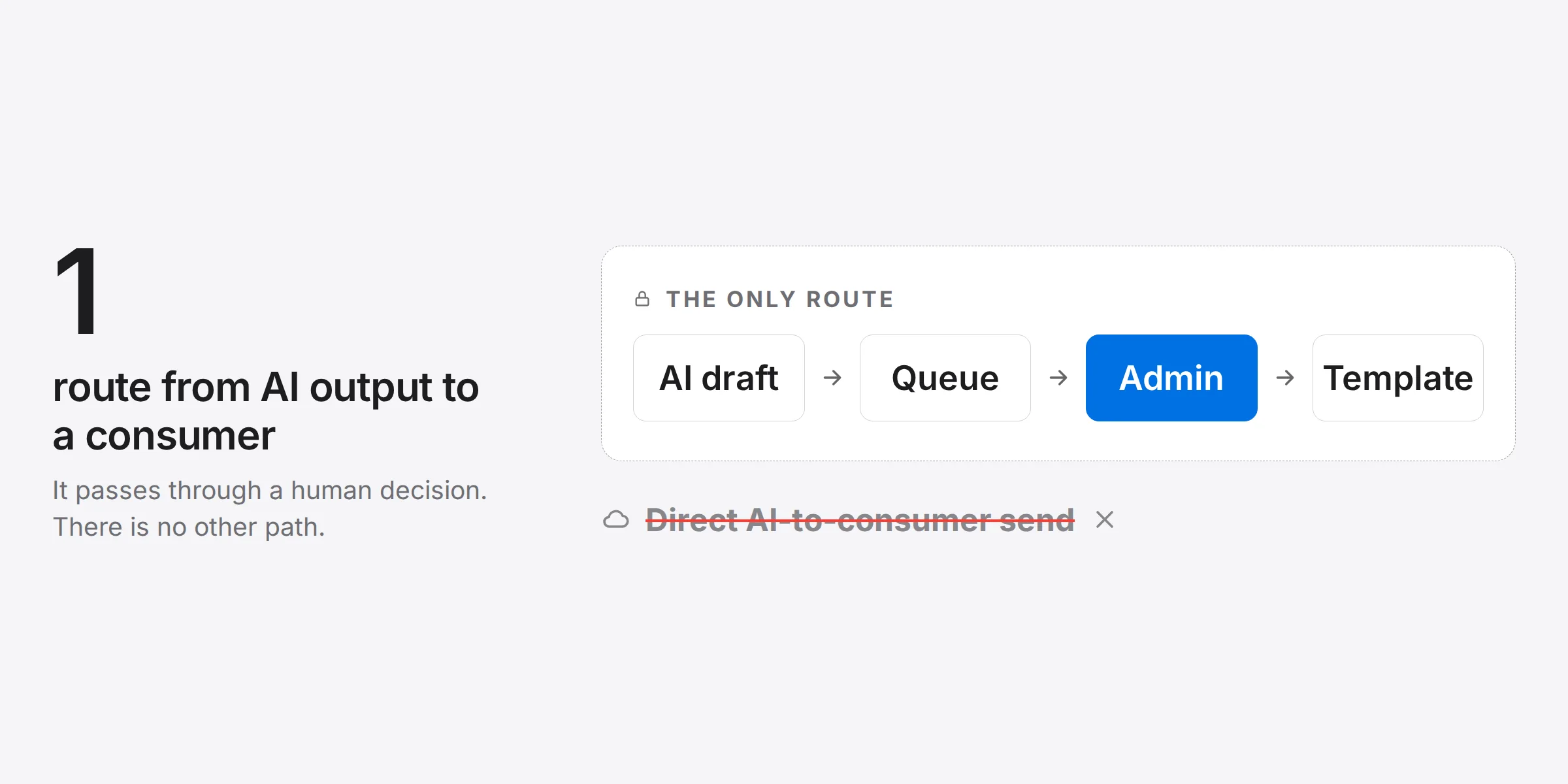
– One route from AI output to a consumer, and it passes through a human decision.
How Insurance Advertising Compliance Works for Trusted Users
The standard flow had to work for most users, and the platform also had to let trusted users move faster. Instead of changing the main flow for everyone, Teamvoy added a role-based auto-approval permission that an administrator grants where it makes sense. The permission is explicit and tied to a role, so the exception stays visible and can be reviewed later. For insurance advertising compliance, the point is that the exception is never the default. The business can see where the standard path applies and where a deliberate exception was granted.
How Marketing Compliance Software Can Meter AI Usage
As the feature moved toward production, the team needed to know how AI was being used across tenants and how that usage should show up commercially. The platform introduced per-action metering: $0.20 per generation and $0.25 per review, charged to the tenant wallet as agents use the feature. Two things came out of that. Usage became measurable per tenant and per action instead of being estimated from the AI infrastructure bill. And the feature turned from an internal cost into a product line, where usage connects to billing. For marketing compliance software, that links AI usage, adoption and product value without touching the approval workflow. One honest note on pricing: agents pay for a generation even when the draft is later rejected. That’s a cost of the model, not of the review, and the client chose to keep it visible rather than hide it in a platform fee.
| Technology | Role in the solution |
|---|---|
| gpt-4.1 | Generates and refines HTML email |
| Approval queue | Holds every AI-generated draft until an administrator makes a decision |
| Draft-state model | Moves each email from draft to pending to approved |
| Rejection with feedback | Returns a draft to the agent with reviewer comments |
| Role-based auto-approval permission | Gives trusted users an explicit and auditable exception |
| Wallet metering | Charges $0.20 per generation and $0.25 per review |
The Build Took 7 Weeks. Production Took 16
The engineering moved quickly; production took longer than the build. The approval queue was released in month 1. The compliance flow and the draft-state model followed in month 2, which brought the core build to about seven weeks. The first production tenant was enabled in month 4, sixteen weeks after the queue went live.
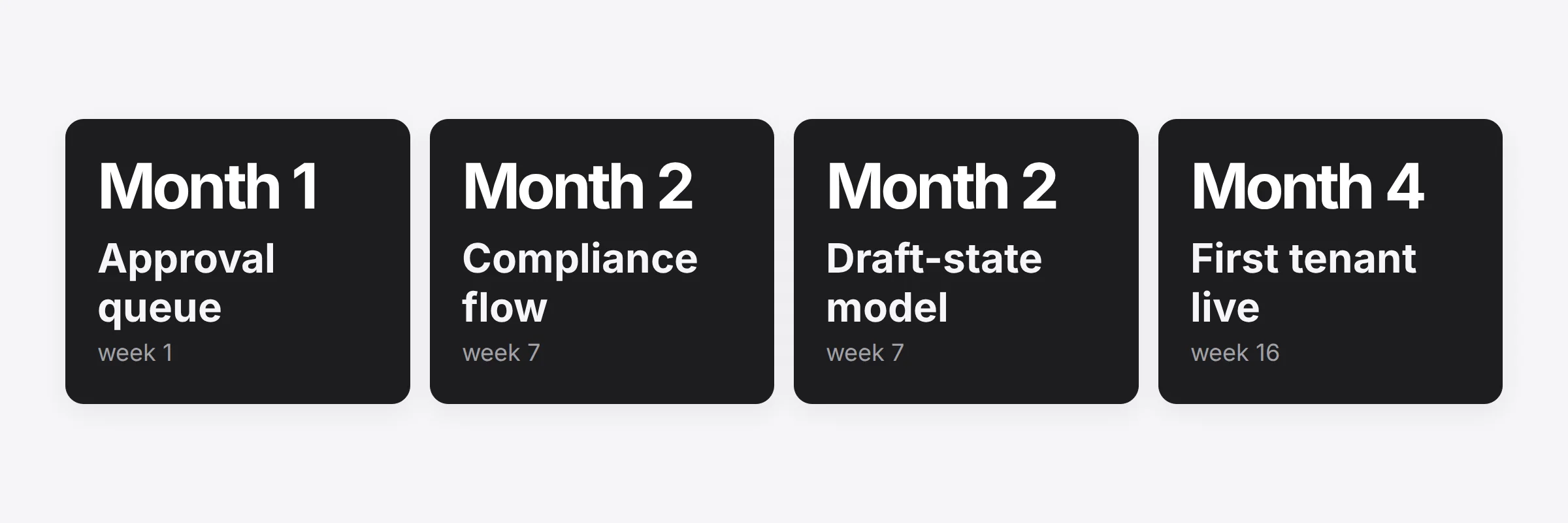
– The timeline: approval queue in month 1, compliance flow and draft-state model in month 2, first production tenant in month 4.
The nine weeks between those two numbers were compliance review and validation, not more engineering. That is normal in regulated product work: the feature can work technically while the business still needs time to review the workflow, confirm the exception model and sign off on what agents may send. Teamvoy planned for that gap instead of treating it as a delay; more engineering would not have shortened it.
04. Results
The feature is in production and metered
The results below cover controls and product changes that are in place today. Adoption and revenue figures aren’t included because those numbers belong to the client.
| Metric | Before | After | Change | Status |
|---|---|---|---|---|
| Path from AI output to a consumer | Not applicable | 1 path, through a human decision | Structural compliance control | Production |
| States of an AI-drafted email | Not applicable | 3: draft, pending, approved | Clear review lifecycle | Production |
| Review exceptions | Not applicable | Explicit, role-based, auditable permission | Visible exception model | Production |
| AI spend | Platform cost | Metered per action | Productised AI usage | Production, metered |
| Usage signal | Not available | Measured through per-action usage | Tenant-level demand data | Production |
| Build to first tenant | Not applicable | 16 weeks | About 7 weeks build and 9 weeks compliance review | Live, month 4 |
AI Generated Email Compliance in Four Numbers
| Number | What it means |
|---|---|
| 1 route | The path from AI output to a consumer goes through a human decision. |
| 3 states | Draft, pending and approved form the lifecycle before content becomes usable. |
| $0.20 and $0.25 | Generation and review are priced per action and charged to the tenant wallet. |
| 16 weeks | From the approval queue release to the first production tenant, including the planned compliance review. |
05. Conclusion
Insurance marketing compliance for AI email doesn’t mean slowing the whole workflow down.
It means deciding where a human decision is required and making that step part of the product. In this build, AI handles generation and refinement, the platform controls approval and final use, every draft follows the same lifecycle, exceptions are explicit and auditable, and usage is measured per action. The model can write the email. The product decides whether it’s ready to reach a consumer. That separation gives agents the speed of AI without moving the approval responsibility into the model.
Talk to Teamvoy About AI Email in a Regulated Industry
If your team uses AI to create customer-facing content in a regulated environment, start with the workflow rather than the model.