LLMOps Consulting Services for Production LLM Systems
Teamvoy builds the operations layer around large language models that already serve your users: evaluation suites, tracing on every call, and a rollback path. We run it with your engineers after launch.
Trusted by engineering teams at:















Verified B2B client reviews from fintech, insurance, healthcare, and hi-tech engagements.

A B2B review platform that connects businesses with verified software solutions providers.

Transparent platform where current and former employees share company reviews and interview experiences.
What Are LLMOps Consulting Services?
LLMOps is the operational discipline around a deployed large language model, covering everything between the model endpoint and the user. Five components make up the practice, and an engagement begins with whichever your stack lacks.

Evaluation suites
A versioned case set covering the paths users take, run in CI against every prompt edit, corpus change and provider bump, with a pass threshold gating release.
Versioning
Prompts, model identifiers, tool contracts and the retrieval corpus each carry a version, so any answer traces back to the configuration that produced it.
Observability.
One trace per request spanning retrieval, model call and tool call, with token counts, latency and outcome at every hop.
Cost telemetry
Spend measured per resolved request rather than per token, split by model, route and feature, so a routing change carries a number.
Release control
A path back to the previous configuration in minutes, not a deploy cycle.
What Our Clients Say
Teamvoy has successfully launched the system within the set timeline and integrated all the required tools and features. The collaborative team led regular meetings, delivered on time, and communicated effectively. Their proactive problem-solving approach and commitment to innovation stand out.

Jim Hill, Director of Marketing & Business Development, Market Access Direct, LLC
The care and interest they showed are what makes Teamvoy special. The system contributes to company sales, which is the best metric of success. Teamvoy was excellent in terms of project management and were extremely responsive while coming up with creative solutions.

Arnon Rosan, CEO & Founder, EverBlock Systems, LLC
The game had a huge impact on the client’s business and helped display the exhibition. Teamvoy utilizes project management tools to ensure a smooth workflow. The team us understanding, hard-working, and experienced.

Dr. Christian Stein, CEO, MeinObject
Teamvoy’s support and expertise have been integral in helping the client build and scale their product. An agile partner, they manage their tasks well and are consistent in delivering according to schedule. Their strong understanding of blockchain and the quality of their work make them stand out

Gordon Little, Managing Director, Iress
We work with them for over 2 years, and they have been very reliable and timely in providing us quality development services. Their creative input and talented team helped us build a better product!

Nazar Fedorchuk, CEO & Founder, Senstone
Talk to an LLMOps Consulting Services Expert

-
Retrieval
Which documents were fetched, their scores, and whether the answer cited them. Most quality questions resolve here — mechanics in retrieval quality and cost in enterprise RAG.
-
The model call
Provider, model identifier, prompt version, tokens in and out, time to first token and total latency.
-
Tool calls
Which tool the model selected, the arguments it passed, what came back, and how many times the loop ran.
-
Outcome
Whether the request resolved, went to a person, or was retried — joined to cost, so spend reads per resolved request rather than per million tokens.
What LLMOps Looks Like Under Model Risk and Audit Requirements
In a regulated deployment the operations layer is also the evidence layer, and an auditor asks for records rather than architecture. Four artifacts carry that weight, and each is a design decision taken before launch.

Version lineage per decision
For any output that affected a customer, the prompt version, model identifier, retrieval snapshot and tool responses behind it. Under SR 11-7 model risk guidance this is what makes an LLM component reviewable in the same terms as a scorecard.
Human review records
Which outputs a person approved, changed or rejected, timestamped and attributable — the control most often relied on where a fully automated decision sits outside scope under the EU AI Act.
Retention and residency
Traces hold customer text, so retention windows, redaction and inference region are GDPR questions rather than infrastructure preferences. DORA adds concentration risk where one provider serves every route.
Change control
SOC 2 change management applied to prompts and corpora, not only to code, because both move model behavior.

Our LLMOps Success Stories

Eliminating the 90% Noise: How Teamvoy Re-Engineered Trade Surveillance Software for a Global Exchange
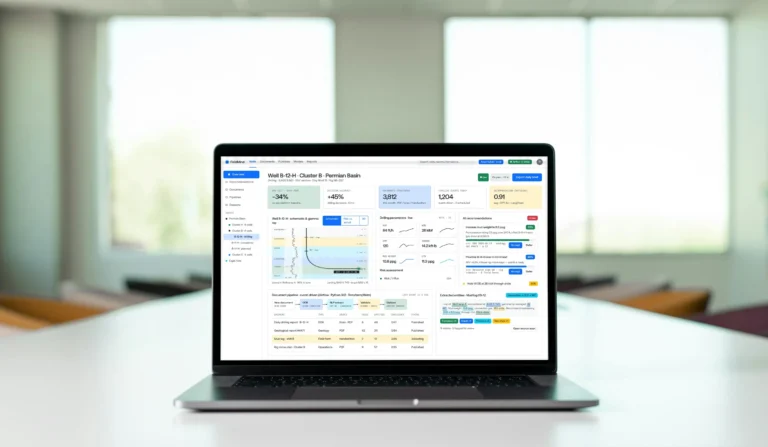
AI in Oil and Gas: 34% Lower Ops Costs, +45% Decision Accuracy for a Global Operator
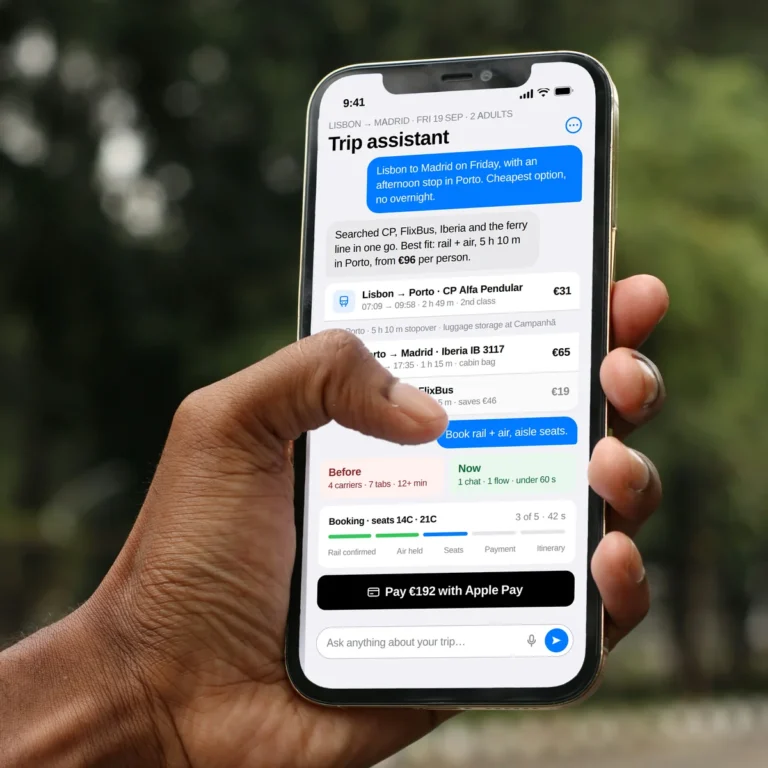
Generative AI in Travel: AI Chatbot & MCP for a Global Booking Platform
How Evaluation Suites Hold Behavior Steady Through a Model Change
An evaluation suite is a versioned case set with graded expectations, run in continuous integration on every change to a prompt, corpus, tool contract or model version. It turns a provider release into a diff.
What the case set contains
Golden cases with known-correct answers, adversarial cases covering ambiguous and out-of-scope input, multi-step cases exercising the tool path, and regressions from real traces.
How it runs
In the same pipeline as the unit tests, with a pass threshold blocking merge, so a prompt edit is reviewed on evidence. The same discipline covers running agents inside a CI/CD pipeline and our AI agent development work.
On a provider bump
The suite runs against the new version, the delta is reported case by case, and the routing config either moves or stays.
The trade-off, stated plainly
Real LLM evaluation adds [FILL — delivery lead: typical weeks to first suite running in CI] to a first release and returns nothing on it. LLMOps best practices converge here anyway, because it pays back on the first model change and every one after. A team shipping one prompt into a low-volume internal tool should skip it.
What LLMOps Looks Like Under Model Risk and Audit Requirements
In a regulated deployment the operations layer is also the evidence layer, and an auditor asks for records rather than architecture. Four artifacts carry that weight, and each is a design decision taken before launch.

Version lineage per decision
For any output that affected a customer, the prompt version, model identifier, retrieval snapshot and tool responses behind it. Under SR 11-7 model risk guidance this is what makes an LLM component reviewable in the same terms as a scorecard.
Human review records
Which outputs a person approved, changed or rejected, timestamped and attributable — the control most often relied on where a fully automated decision sits outside scope under the EU AI Act.
Retention and residency
Traces hold customer text, so retention windows, redaction and inference region are GDPR questions rather than infrastructure preferences. DORA adds concentration risk where one provider serves every route.
Change control
SOC 2 change management applied to prompts and corpora, not only to code, because both move model behavior.
Where Machine Learning Consulting Services and LLMOps Overlap
Machine learning consulting services and MLOps consulting services share a substrate with LLMOps: a registry, a pipeline, drift measurement, a serving path and an on-call rota.
Teams already running classical models extend a platform rather than start one.
What Drives the Cost of an LLMOps Engagement?
Five variables move the size of LLMOps consulting services work, and each is worth pricing before scope is fixed. We quote against them, not a rate card.

Model providers in play
One route on one provider is a fraction of the work of a routing layer across three with fallback.
Corpus size and refresh rate
A static document set is a different build from a corpus changing hourly against a source of record.
Whether evaluation already exists
Extending a case set beats establishing one, and this is the largest single swing.
Compliance scope
Framework evidence, residency and human-review records each add design and documentation.
Where inference runs
Self-hosted inference brings capacity planning and GPU operations that a hosted API does not.
How Do You Choose an LLMOps Consulting Partner?
Four questions separate partners on this work, and each has a concrete answer a vendor can give on a first call. Apply them to us as readily as to anyone else, alongside our guide to comparing AI consulting firms.
Who writes the evaluation suite, and when
Where inference runs and who holds the keys
What the handover artifact is
How provider changes are handled.
Three Ways To Start With Teamvoy
There are three ways to begin, and each starts with a technical conversation. Which one fits depends on how much of the operations layer you already have.
LLMOps Readiness Audit
A read of what your live LLM system already has and what it does not: evaluation coverage, trace depth across retrieval and tool calls, versioning, cost visibility, rollback path. You leave with a written gap list you can act on with any partner.
Sharp Sprint
A fixed two-week sprint with senior engineers and a working piece of the layer at the end — a first evaluation suite running in CI, or tracing wired into your observability stack. Best for teams that already know which gap to close first.
15-Min Technical Call
A direct call with a CTO about where the model runs, what your traces show today, and what breaks the next time a provider ships a version bump.
What Does LLMOps Cover That MLOps Does Not?
The LLMOps vs MLOps question resolves on one distinction: MLOps governs a model you trained, and LLMOps governs a configuration you assembled around a model a vendor trained. A team already running machine learning operations has most of the muscle for both.
Talk to an LLMOps Consulting Services Expert
Talk to a Chief Technology Officer on the first call.