
- Application modernization enhances scalability, security, and operational efficiency.
- The 7 R's framework guides strategic decisions: Retire, Retain, Rehost, Replatform, Refactor, Rearchitect, Replace.
- AI modernization sprints accelerate transformation through rapid, iterative improvements.
- Aligning modernization efforts with business objectives ensures measurable outcomes.
- Choosing experienced partners with expertise in AI and automation is critical to success.
Application modernization is the process of updating legacy software with modern technologies and architectures, such as cloud computing, microservices, and AI, to improve performance, security, scalability, and agility.
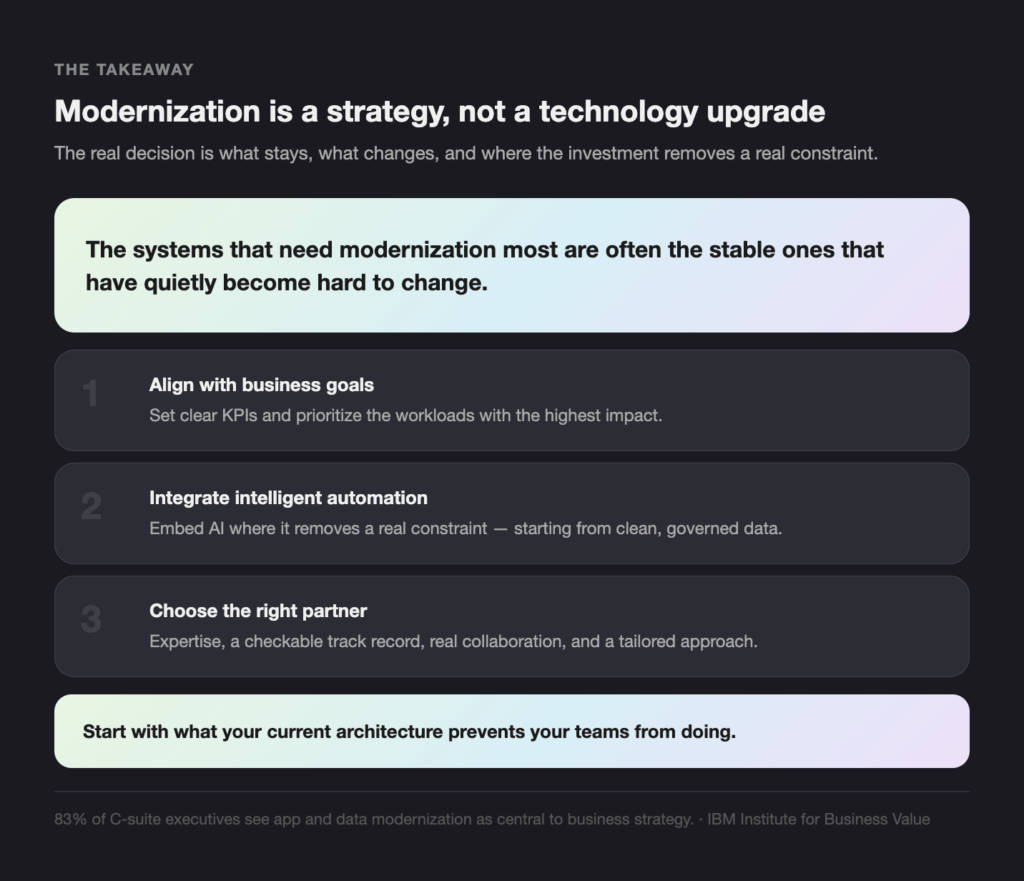
The important part is that modernization does not automatically mean replacing or rewriting an application. The real decision is what should stay, what should change, and where a modernization investment will actually remove technical constraints for the business.
In my experience, the systems that need modernization most are not necessarily the ones that are obviously broken. Quite often, they are stable systems that have been running for years but have become increasingly difficult to change. That is usually where I start: not with which technology should replace the existing stack, but with what the current architecture prevents the product and engineering teams from doing.
| Topic | Key Insight | Why It Matters | Action Item |
|---|---|---|---|
| What is Application Modernization | Updating legacy software using modern tech like cloud and AI to improve agility and security | Keeps applications relevant and supports business innovation | Assess current applications and plan modernization strategy |
| 7 R’s Framework | Seven strategic options to modernize applications based on business needs | Helps select the best approach for each application | Apply the 7 R’s to categorize and plan modernization steps |
| AI Modernization Sprint | Rapid, focused modernization using AI and automation for quick value | Reduces risk and accelerates transformation | Implement sprint cycles to test and deploy AI enhancements |
| Aligning with Business Goals | Modernization must support clear KPIs and involve cross-functional teams | Ensures technology investments deliver business value | Set KPIs and foster collaboration between IT and business units |
| Partner Selection | Expertise in AI, automation, and collaborative approach are essential | A skilled partner increases chances of successful modernization | Evaluate potential partners based on experience and approach |
What is Application Modernization?
Application modernization refers to transforming legacy software into modern, scalable, and maintainable solutions using current technologies such as cloud, microservices, and AI. The goal is to enhance performance, security, and agility, ensuring applications remain relevant and valuable in a rapidly evolving business landscape.
Application modernization is the process of updating legacy applications—those built on outdated frameworks, languages, or infrastructure—to match current business needs and take advantage of modern technology. This transformation typically includes moving to cloud-native architectures, adopting microservices and containerization, and integrating AI capabilities. The main objectives are to improve agility, scalability, and security, while reducing technical debt and maintenance costs.
Legacy applications often struggle with slow performance, security vulnerabilities, and inability to keep up with digital demands. By contrast, modern applications are built for rapid change, resilient operations, and seamless integration with new tools and services. For insights on overcoming legacy challenges, see our post on The Hidden Costs of Legacy Systems.
Why is Application Modernization Important?
Modernizing applications is crucial for organizations seeking to innovate, reduce technical debt, and stay competitive. Modernization allows businesses to leverage new technologies, improve security, and optimize operational costs, directly impacting business agility and long-term success.
Application modernization matters because outdated systems can hold a business back. When legacy software becomes difficult to update or integrate, it slows innovation and increases risk. Modernized applications enable organizations to adopt new business models, quickly respond to market changes, and reduce operational costs. In fact, 83% of C-suite executives see app and data modernization as central to business strategy (IBM Institute for Business Value).
Reducing technical debt through modernization frees up resources for growth. It also allows businesses to improve security, enhance user experiences, and ensure compliance with evolving regulations. In our experience at Teamvoy, modernization projects often spark new opportunities for digital transformation and intelligent automation. Learn more about managing technical debt in our article on Tech Debt Avalanche: Why Companies Are Modernizing Now with AI. the artifact for a stage is not running that stage.
Application Modernization Strategies: Key Approaches
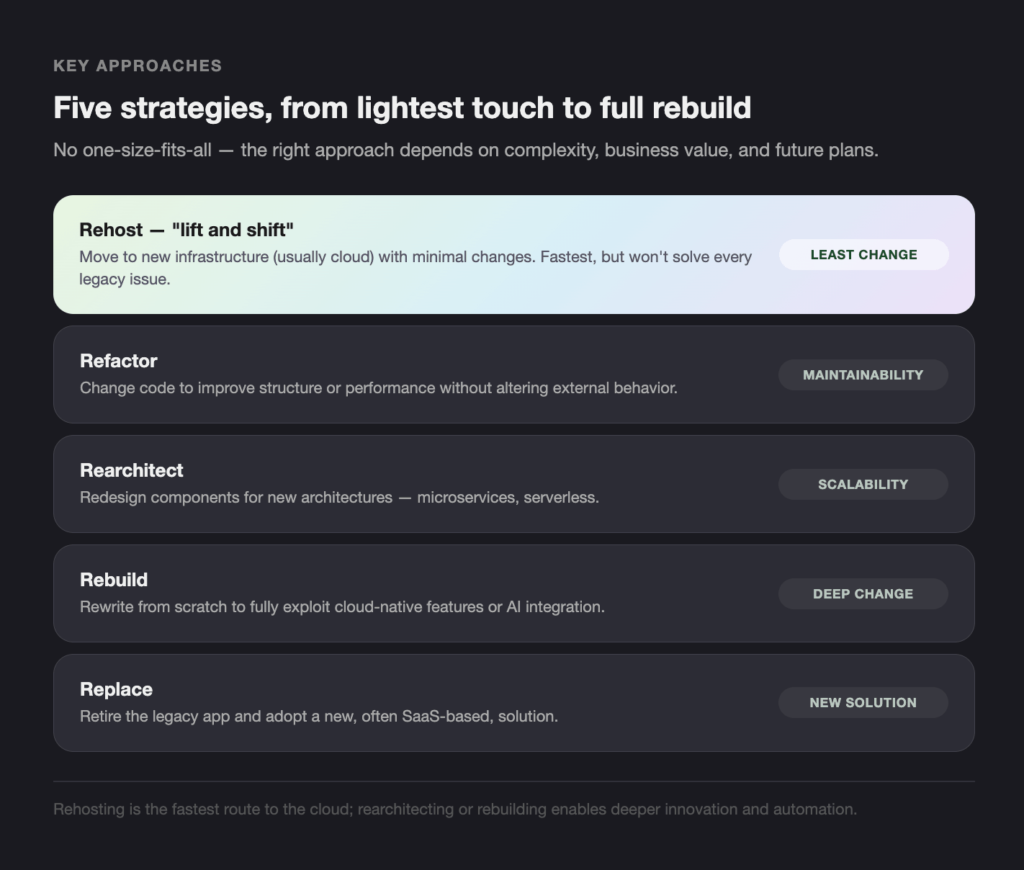
Organizations can modernize applications through several strategies, including rehosting, refactoring, rearchitecting, rebuilding, and replacing. The best approach depends on business goals, technical debt, and resource availability, ensuring that modernization efforts align with both IT and business objectives.
There is no one-size-fits-all approach to the application modernization process. The right strategy depends on your application’s complexity, business value, and future plans:
- Rehosting (“lift and shift”): Moving applications to a new infrastructure, like the cloud, with minimal changes. Fastest, but may not solve all legacy issues.
- Refactoring: Changing application code to improve structure or performance without altering external behavior. Useful for improving maintainability.
- Rearchitecting: Redesigning application components to leverage new architectures, such as microservices or serverless computing.
- Rebuilding: Rewriting applications from scratch, often to take full advantage of cloud-native features or AI integration.
- Replacing: Retiring a legacy application and adopting a new, often SaaS-based, solution.
At Teamvoy, we guide clients through this selection, balancing quick wins with long-term value. For example, rehosting may be the fastest way to move to the cloud, but rearchitecting or rebuilding enables deeper innovation and integration with intelligent automation tools.
The 7 R’s of Application Modernization
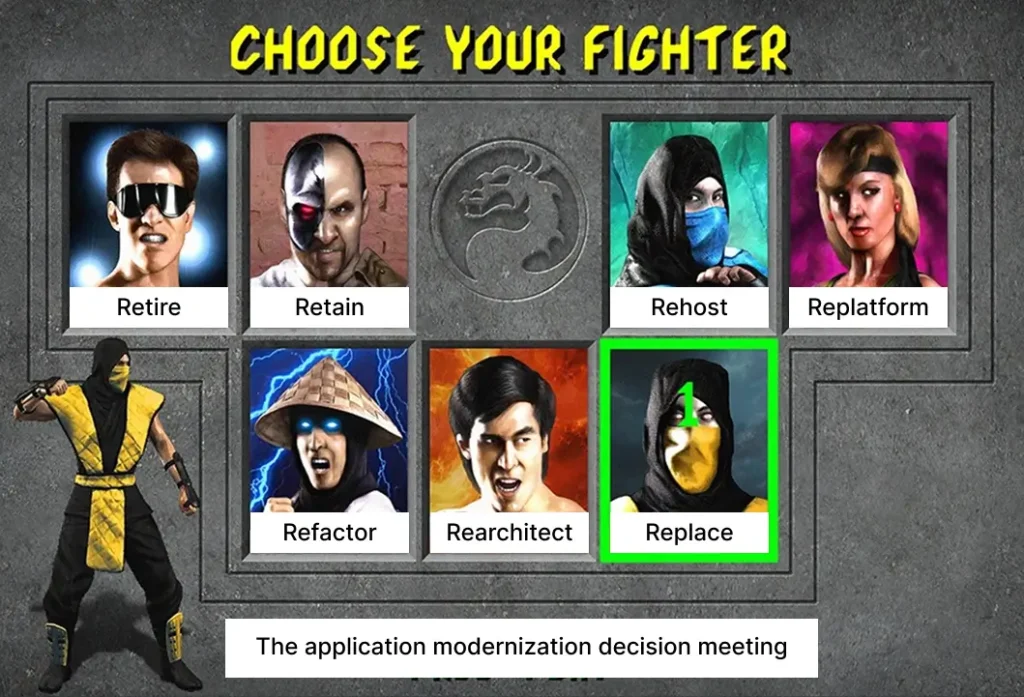
The 7 R’s framework—Retire, Retain, Rehost, Replatform, Refactor, Rearchitect, and Replace—guides organizations in selecting the optimal modernization path for each application. Each ‘R’ represents a decision point, ensuring modernization efforts are strategic and aligned with business needs.
The 7 R’s offer a structured lens for the application modernization process:
- Retire: Remove applications that no longer provide value.
- Retain: Keep applications unchanged if they are still useful and cost-effective.
- Rehost: Move applications to a new environment (often the cloud) without major changes.
- Replatform: Move to a new platform with minor changes to optimize performance.
- Refactor: Modify code to improve quality and maintainability.
- Rearchitect: Redesign for new capabilities or better scalability.
- Replace: Swap old applications for new solutions.
Applying the 7 R’s helps organizations make informed, strategic decisions about which applications to modernize and how.
AI Modernization Sprint: Accelerating Transformation
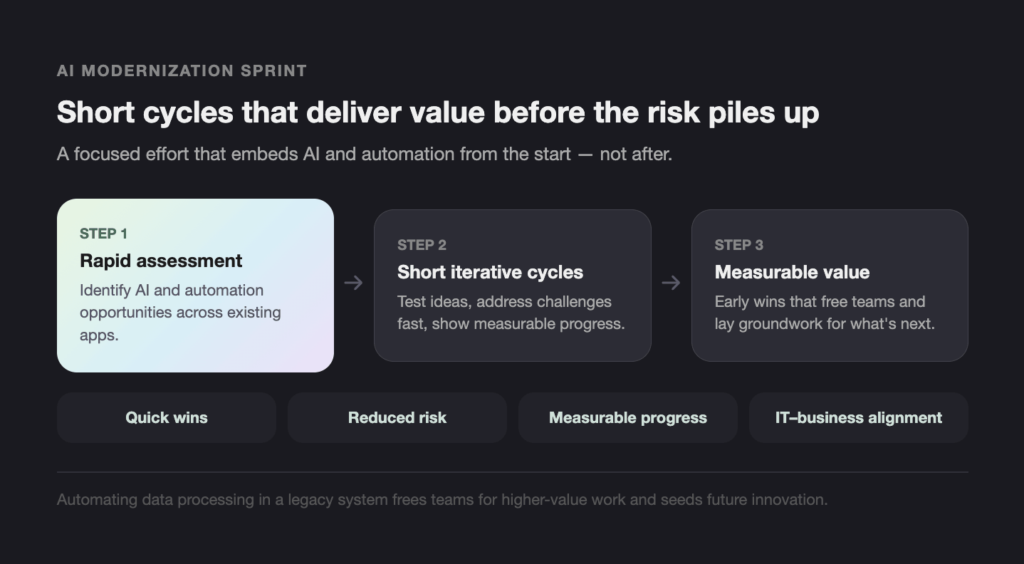
An AI modernization sprint rapidly assesses and upgrades legacy applications by integrating AI-driven automation and analytics. This approach enables quick wins, reduces risk, and creates a foundation for ongoing innovation, making modernization both efficient and strategically aligned with business objectives.
An AI modernization sprint is a focused, accelerated effort to modernize legacy systems by embedding AI and automation from the start. At Teamvoy, our AI modernization sprint begins with a rapid assessment of your existing applications, identifying opportunities for AI integration and intelligent automation.
This sprint-based approach delivers early value and reduces risk. By tackling modernization in short, iterative cycles, organizations can test new ideas, address challenges quickly, and show measurable progress. For example, automating data processing in a legacy system can free teams for higher-value work and lay groundwork for future innovation.
Sprints also make it easier to align IT changes with business objectives, ensuring that every modernization step contributes to company goals. For a deeper dive into this approach, see our detailed post on AI Modernization Sprints: A New Delivery Model for Companies That Can’t Afford a Rewrite. AI gateway in front of the providers is what makes switching between them a config change rather than a project.The next three are slow delivery at 20%, distrust of the payment form at 19%, and forced account creation at 18%.
Aligning Modernization with Business Goals
Successful application modernization aligns IT transformation with broader business objectives, ensuring technology investments drive measurable outcomes. This involves prioritizing workloads, setting clear KPIs, and engaging stakeholders from both IT and business units to sustain value delivery.
The true value of application modernization comes from connecting technology changes with business results. We recommend:
- Setting clear KPIs: Define what success looks like, from cost savings to improved customer experience.
- Cross-functional collaboration: Bring together IT, business, and operations teams. This ensures everyone is working towards the same goals.
- Prioritizing workloads: Focus on applications that have the highest impact on business outcomes.
For example, when we partnered with a retail client, aligning modernization with their goal of faster product launches led us to automate inventory systems and integrate AI demand forecasting—delivering both IT efficiency and real business value.
How to Choose a Modernization Partner
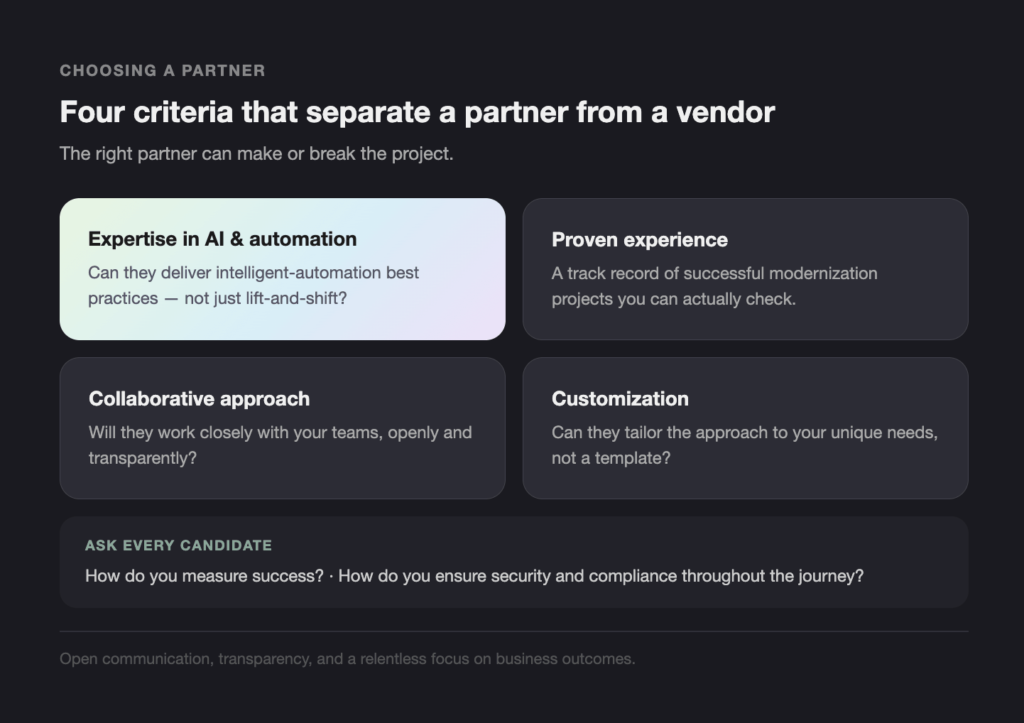
Selecting the right modernization partner is critical for project success. Key criteria include proven expertise in AI and automation, a track record of successful transformations, a collaborative approach, and the ability to tailor solutions to specific business needs.
Choosing a partner for your application modernization process can make or break your project. Look for:
- Expertise in AI and automation: Can the partner deliver intelligent automation best practices?
- Proven experience: Do they have a history of successful modernization projects?
- Collaborative approach: Will they work closely with your teams?
- Customization: Can they tailor their approach to your unique needs?
At Teamvoy, we believe in open communication, transparency, and a relentless focus on your business outcomes. You can see how Teamvoy structures this work — including the AI-assisted migration approach — on our application modernization services page. For an honest read on the wider market, our review of the best legacy platform modernization firms compares ten vendors by refactoring track record. Ask potential partners how they measure success and how they ensure security and compliance throughout the modernization journey.Compliance remediation. Cheap in phase 3, expensive in phase 6.
Benefits of Application Modernization
Modernizing applications delivers tangible benefits, including improved agility, enhanced security, reduced operational costs, and increased innovation capacity. These advantages position organizations to respond quickly to market changes and customer demands.
Application modernization brings real, measurable benefits. Organizations enjoy:
- Greater agility and scalability: Quickly adapt to market changes and scale to meet demand.
- Enhanced security: Modern security practices and regular updates protect against threats.
- Lower operational costs: Optimized infrastructure and automation reduce expenses.
- Innovation enablement: Modern architectures support digital transformation and AI integration.
Worldwide public cloud end-user spending is forecast to reach $723.4 billion in 2025, growing 21.5% year over year (Gartner, 2024-11-19). Modernization enables businesses to fully participate in this growth, leveraging cloud-native features and intelligent automation.
Challenges and Risk Mitigation in Modernization
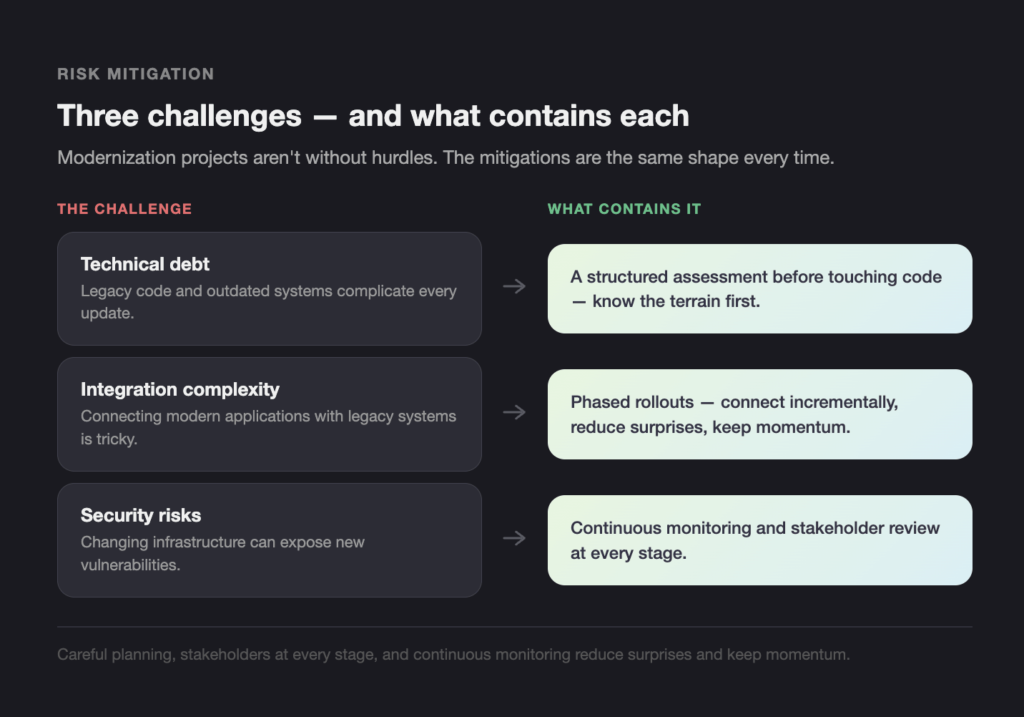
Common challenges in application modernization include technical debt, complexity, legacy integration, and security risks. Effective risk mitigation involves thorough assessment, clear planning, stakeholder engagement, and continuous monitoring throughout the modernization journey.
Modernization projects are not without hurdles. The most common challenges are:
- Technical debt: Legacy code and outdated systems complicate updates.
- Integration complexity: Connecting modern applications with legacy systems can be tricky.
- Security risks: Changing infrastructure can expose new vulnerabilities.
Mitigating these risks requires careful planning, involving stakeholders at every stage, and continuous monitoring. At Teamvoy, we use structured assessments and phased rollouts to reduce surprises and maintain momentum.
Best Practices: Intelligent Automation and AI Integration
Integrating intelligent automation and AI into modernization processes accelerates transformation and unlocks new capabilities. Best practices include identifying automation opportunities, ensuring data quality, and adopting iterative, agile approaches to implementation.
Intelligent automation and AI are essential for unlocking the full value of modernization. The best practices we recommend include:
- Identify automation opportunities: Look for repetitive, manual processes that slow down business.
- Ensure data quality and governance: AI is only as good as the data it uses. Invest in cleaning, securing, and governing your data. If the data layer itself is the blocker, start with data platform modernization services.
- Iterative, agile implementation: Tackle modernization in small, manageable steps, using frequent feedback to improve.
As specialists in intelligent automation, Teamvoy has seen first-hand how these practices accelerate digital transformation and deliver ongoing value.
Conclusion
Application modernization is more than a technology upgrade—it is a strategic process that positions your business for future success. By understanding what is application modernization and following a structured, AI-driven approach, you can reduce technical debt, increase agility, and unlock new growth opportunities. At Teamvoy, we believe that aligning modernization with your business goals, integrating intelligent automation, and choosing the right partners are keys to sustainable, long-term value. Start your modernization journey today to ensure your business stays competitive and ready for whatever comes next.