

- DeepSeek Harness is an open-source agent runtime for technical teams that want to inspect, extend, and operate the software around an AI model. ChatGPT is a managed AI workspace built for faster organizational adoption.
- Choose between them by comparing data paths, setup, administration, runtime security, extensibility, and total cost. A locally running Harness UI does not, by itself, keep prompts, files, or session records local.
A local agent interface and a managed AI workspace may solve overlapping tasks, but they create different operating obligations. The enterprise decision starts with who runs the control plane, where data travels, and which team owns the risk—not with a model leaderboard.

Harness vs ChatGPT: the decision matrix
The central distinction is product category. A serious DeepSeek vs ChatGPT evaluation starts with the operating model, not a model leaderboard. Harness is software your team operates, extends, and secures. ChatGPT is a vendor-operated workspace your team configures and governs.
| Decision factor | Harness | ChatGPT Business or Enterprise |
| Product category | Open-source agent runtime and orchestration environment | Managed AI workspace |
| Operating model | Your team installs, configures, upgrades, isolates, and monitors the runtime | OpenAI operates the application and underlying service |
| Data boundary | Depends on model provider, gateway, tools, telemetry, and session-log settings | Vendor-hosted; organizational data controls depend on the selected business plan and configuration |
| Time to first use | Requires technical setup and a reviewed provider configuration | Faster onboarding for a broad workforce |
| Administration | Built by your platform team around the runtime | Workspace-level administration supplied as part of the managed product |
| Extensibility | Code-level plugins, tools, providers, and custom gateways | Product features, workspace configuration, connectors, and supported APIs |
| Security responsibility | Customer owns runtime hardening, isolation, permissions, upgrades, and deployment review | Shared responsibility, with more of the application runtime operated by the vendor |
| Operations burden | High relative to a managed workspace | Lower runtime burden, though governance and user administration still remain |
| Cost model | No MIT license fee; API, infrastructure, engineering, security, monitoring, and support costs remain | Per-seat Business pricing or contact-sales Enterprise pricing; API usage is separate |
| Best initial fit | A bounded technical workflow with engineering ownership | Broad employee access where managed onboarding and administration matter |
The matrix does not declare a universal winner. One team may value runtime control; another may rationally pay for a managed workspace instead of funding a platform around experimental software.
What is DeepSeek Harness?
The Harness is an open-source, plugin-based runtime for AI agents that use configured models, tools, files, and multi-step workflows. DeepSeek calls it a developer preview, and the repository warns that breaking changes will occur. The MIT-licensed code follows an “everything is a plugin” design powered by Cordis.
That design lets engineers add tools, providers, or behavior without treating the model as the whole product. See the official DeepSeek Harness GitHub repository and project README for the current implementation status.
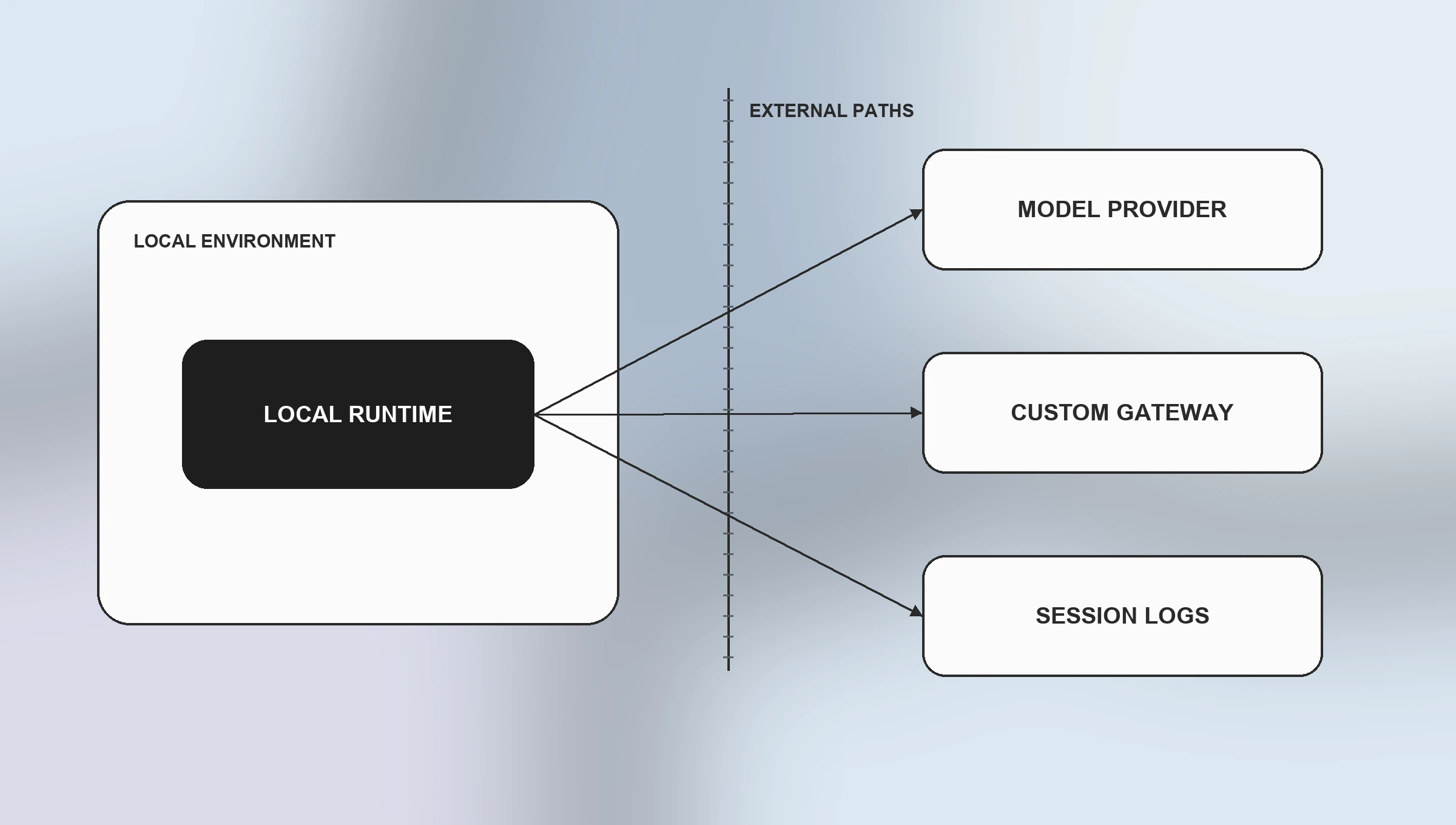
The local Web UI listens on 127.0.0.1:3080 by default. That address identifies the interface, not where inference happens or every data object goes.
This distinction matters because the runtime can call the official DeepSeek API, shipped third-party providers such as OpenAI and Anthropic, or custom OpenAI- and Anthropic-compatible gateways. The official provider guide makes model routing a configurable part of the system.
The search phrase deepseek harness github often signals that a reader wants the source. Enterprise review also requires the safety notice, provider guide, sandbox documentation, permission presets, and session-log behavior.
Is local execution the same as a local data boundary?
Local execution isn’t the same as local inference or local data residency. A deployment may process local files while sending prompts or derived context to an external provider. A gateway or network-enabled tool can add more flows. Your data boundary depends on every configured path, not the location of the browser interface.
Map prompts, attachments, retrieved content, tool output, credentials, logs, and generated artifacts rather than labeling the system “self-hosted” and stopping there.
There is also a DeepSeek-specific behavior to review. As documented on November 6, 2026, the official request extension enables incremental session-log contribution by default. It can append the unaccepted log suffix to official API requests, up to 8 MiB per request. Users can disable it under Settings → General; re-enabling resumes from the unaccepted suffix. See the request extension documentation and settings UI documentation.
That behavior is date-sensitive and should be rechecked before deployment. The useful review question is: “Which content can leave this environment under the provider, tool, and contribution settings we plan to ship?”
ChatGPT is vendor-hosted rather than a customer-operated local runtime. OpenAI states that Business, Enterprise, and API data is not used for training by default. Include its enterprise privacy commitments and business data documentation in procurement review. Consumer controls are not substitutes for Business, Enterprise, or API terms.
Is DeepSeek Harness safe for enterprise use?
Harness should not be treated as production-ready enterprise software in its current documented state. The official safety notice says it is experimental developer-preview software, has not undergone a security audit, and must not be considered secure or production-ready. It recommends least privilege and a disposable virtual machine, container, or dedicated environment.
That is stronger than “an audit was not found.” A regulated organization should not turn compensating controls into an unqualified claim that the product is enterprise-safe.
Start with a bounded pilot using synthetic or low-sensitivity data. Assign owners for the runtime, provider settings, secrets, updates, incident response, and decommissioning. Keep the agent away from production credentials and broad file trees. Teamvoy’s guide to AI agent deployment controls covers the surrounding isolation and observability decisions.
Filesystem sandboxing is not full isolation
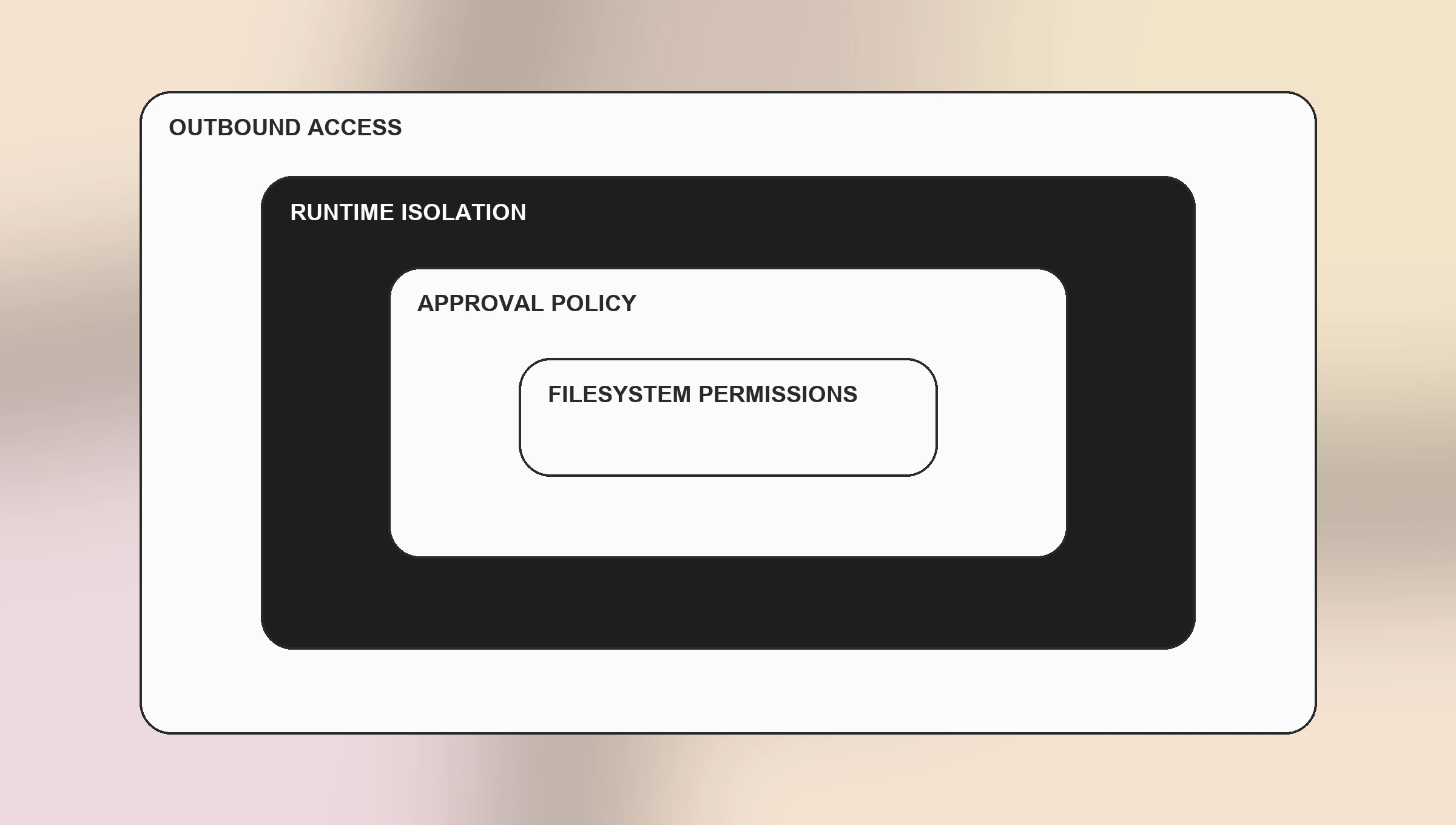
The documented sandbox modes describe filesystem effects: read-only, workspace-write, and danger-full-access. They do not establish complete network or process isolation.
The official sandbox documentation separates filesystem rules from network and process visibility. Enforcement can be partial on some backends, and danger-full-access bypasses confinement.
Permission presets add approval behavior to those modes. The shipped defaults pair workspace-write with ask; the dangerous preset pairs danger-full-access with never. “Auto” uses broad filesystem access with approval behavior while active. Read the permission preset documentation before trusting a UI label as a security boundary.
A container or VM can improve separation, but its security depends on mounts, network rules, credentials, kernel exposure, and host integration. Filesystem permissions are one control, not a replacement for infrastructure isolation.
| Control | What it governs | What it does not prove |
| Sandbox mode | File access and writes | Network or process isolation |
| Approval policy | When the agent asks before an action | That an approved action is safe |
| Container or VM | A separate runtime boundary | Safe mounts, credentials, or outbound access |
How do Agent Teams affect the comparison?
Agent Teams is an experimental, opt-in capability for coordinating work across agent sessions, not a mature enterprise control plane. The current Agent Team subsystem documentation says new sessions default to Team mode off, and the root session controls selection for its subagent tree. The feature supports technical experiments with delegation and coordinated work.
It doesn’t remove the need for authorization boundaries, audit design, workload limits, failure handling, or human approval.
Harness exposes runtime components developers can inspect and extend. ChatGPT supplies a managed experience and organizational controls. A feature list can hide who builds the missing operational layer.
If your roadmap includes several agents, define the coordination problem before choosing a runtime. AI agent orchestration is an architecture concern involving state, ownership, handoffs, and failure recovery—not merely the ability to start subagents.
What does setup and administration look like?
Harness asks an engineering or platform team to own installation, credentials, model routing, plugins, upgrades, isolation, monitoring, and user access. ChatGPT asks an IT or business owner to administer a managed workspace. The first path creates a platform workload; the second moves more runtime work to the vendor.
A public Harness deployment also needs reverse-proxy, TLS, trusted-host, token, cookie, and network controls. The project’s public deployment guide warns that –public-url advertises an address; it doesn’t protect the listening port.
ChatGPT reduces customer-operated runtime work. It can be the better engineering decision when the use case is ordinary knowledge work and supported product capabilities are sufficient. This is the trade-off that runs against Teamvoy’s commercial interest: if ChatGPT Business meets the requirement without custom integration, paying a software team to build and operate a Harness platform may add cost and risk without creating useful differentiation.
A managed workspace still requires identity rules, data classification, retention review, onboarding, monitoring, and exception handling. The vendor operates more of the stack; your organization still governs its use.
How should you compare DeepSeek pricing with ChatGPT pricing?
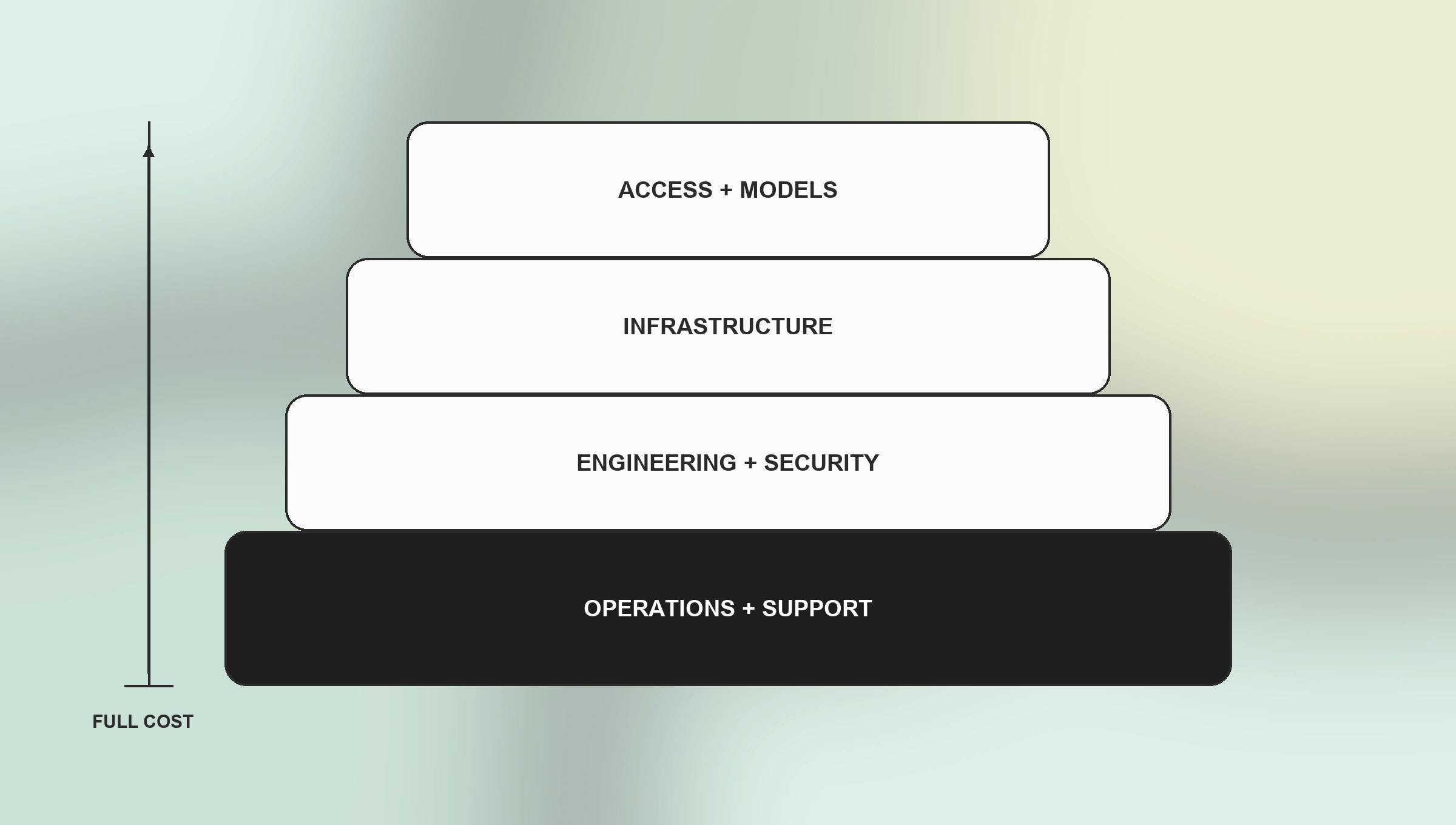
Compare total cost for a defined workload, not DeepSeek API rates against ChatGPT seat prices as if they buy the same thing. As of November 6, 2026, the MIT-licensed runtime has no software license fee. Its operating cost can include models, compute, storage, engineering, integration, security review, monitoring, incident response, upgrades, and support.
The official DeepSeek API pricing page, retrieved November 6, 2026, listed two current model lines. deepseek-flash showed cache-miss input at $0.15 off-peak or $0.30 peak per one million tokens, and output at $0.60 off-peak or $1.20 peak. deepseek-v4-pro showed cache-miss input at $0.66 off-peak or $1.32 peak, and output at $1.98 off-peak or $3.96 peak. The page also published lower cache-hit rates. Recheck model names, limits, time windows, and prices on publication day.
As of November 6, 2026, the official OpenAI Help Center listed ChatGPT Business at $25 per user per month when billed annually or $30 per user per month when billed monthly, with a two-user minimum. ChatGPT Enterprise uses contact-sales pricing. The ChatGPT Business plan page is the appropriate organizational reference. OpenAI API usage is billed separately from ChatGPT subscriptions.
| TCO component | Harness path | ChatGPT Business/Enterprise path |
| Software access | MIT-licensed runtime | Subscription or enterprise contract |
| Model consumption | Provider API, gateway, or self-hosted inference cost | Included workspace capabilities; API billed separately |
| Infrastructure | Customer-operated runtime and supporting services | Primarily vendor-operated application infrastructure |
| Engineering | Setup, plugins, integrations, upgrades, and troubleshooting | Configuration, supported integrations, governance, and change management |
| Security | Runtime hardening, isolation, provider review, secrets, logging | Procurement, plan controls, identity, data policy, and vendor-risk review |
| Support | Internal ownership or separately arranged support | Plan-dependent vendor support |
| Cost predictability | Workload-dependent | More seat-driven for the workspace; API remains usage-driven |
The lowest token rate may not produce the lowest annual cost. Seat pricing can also waste money if users rarely need the tool. Model the users, request volume, data classes, integrations, support hours, and expected change rate. Our guide to the total cost of AI implementation explains why model access is one budget line.
Which option fits your organization?
Choose the operating model your organization can govern consistently, then test it against one bounded use case. Harness fits an experiment that needs code-level extensibility, assigned engineering ownership, reviewed outbound data paths, and an isolated runtime. Its preview status makes production deployment a separate decision with a fresh technical and security review.
Choose ChatGPT Business or Enterprise when broad workforce adoption, faster onboarding, managed administration, and lower customer-operated runtime burden matter more than code-level runtime control. Confirm that the selected plan, terms, retention settings, and identity controls fit the data class and workflow.
Use both only when governance separates their jobs. Define approved data classes, providers, owners, integrations, and escalation paths for each environment. A vague “employees can choose” policy creates inconsistent data handling and duplicated spend.
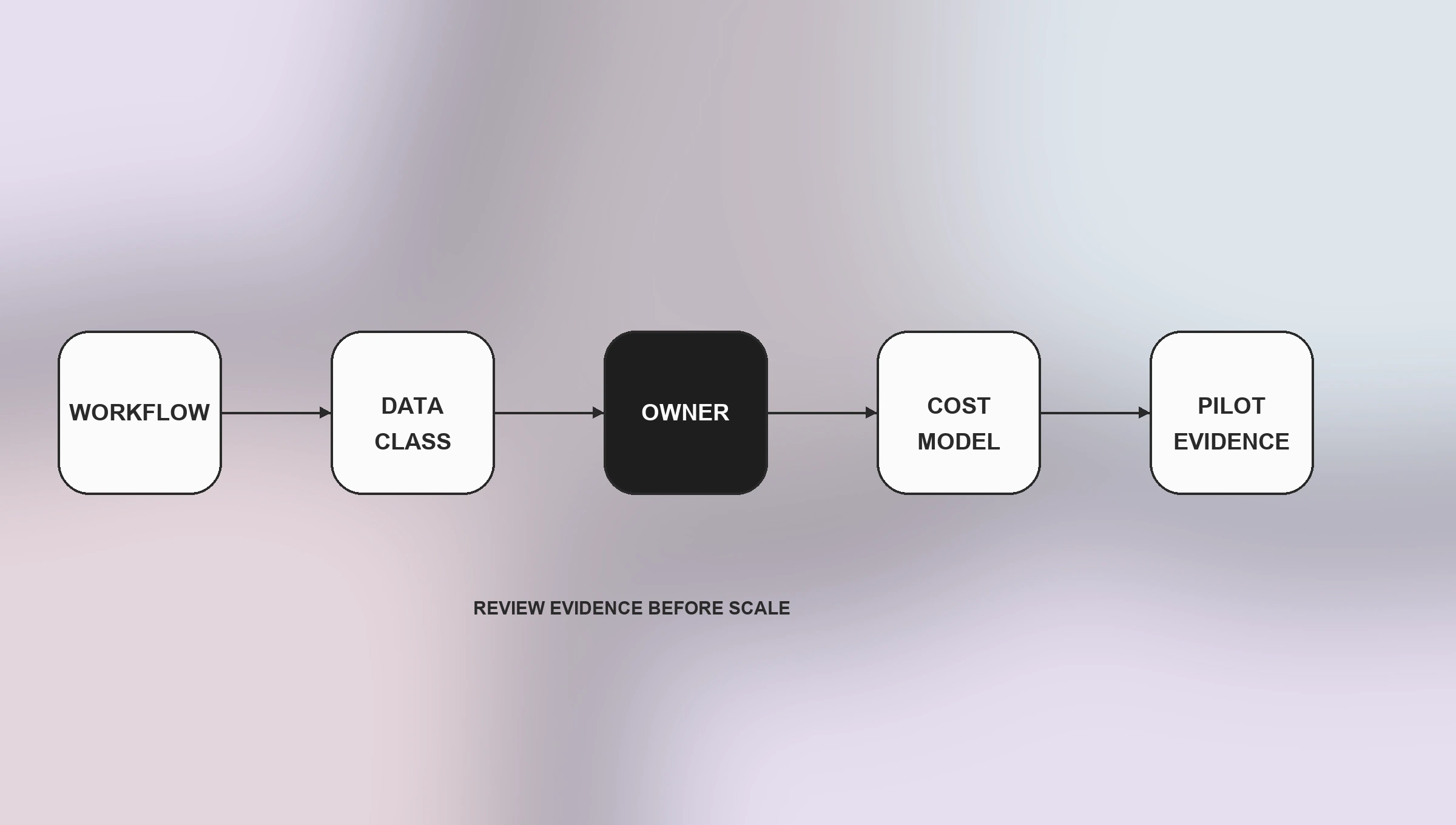
A useful selection process is short:
- Define one workflow and the decision it improves.
- Classify the data and map every processor and storage location.
- Name the runtime, security, and business owners.
- Estimate TCO using workload and support assumptions.
- Run a time-boxed pilot with exit criteria.
- Review evidence before expanding access or data sensitivity.
An enterprise AI readiness assessment can expose ownership, data, and integration gaps before they become platform commitments. The agentic AI implementation guide covers the path from bounded workflow to controlled production system.
Conclusion
Harness is an extensible agent runtime with customer-owned operating obligations. ChatGPT is a managed workspace with vendor-operated application infrastructure. The right choice follows from the workflow, data boundary, ownership model, and full cost—not a generic claim about which model is better.
Talk to Teamvoy About a Controlled AI Pilot
If your use case needs custom tools, model routing, or integration with internal systems, hire AI engineers to scope and ship a controlled pilot. Teamvoy can help map the data boundary, define the operating model, and test whether custom engineering creates enough value to justify its cost.