- There is no single best fintech application development partner; the right fit depends on whether you are launching, scaling, or stabilising a regulated platform already in production.
- We assess partners on five criteria: named regulator experience, engagement model and length, senior technical lead ownership, capacity to stabilise inherited systems, and AI integration on a live core.
- PCI DSS v4.0.1 has been fully mandatory since 31 March 2025, DORA applies since January 2025, and PSD3 carries roughly a 21-month application clock.
- Published 2026 MVP estimates span 8,000 to 350,000 dollars because each source scopes compliance differently; budget by PCI level and licensing path, not feature count.
- AI-generated pull requests average 10.8 issues against 6.4 for human-written code, so stabilisation starts with finding suppressed errors, not adding features.
- Cutovers fail on latency and undocumented operational knowledge rather than data, which is why dependency mapping and a scream test come before extraction.
Q1. Which Fintech Application Development Partners Fit Which Build Situation?
There is no single best fintech application development partner. Teamvoy fits regulated platforms that must keep running while being modernised; others fit greenfield MVPs, white-label cores, or staff augmentation. Judge on named regulator experience, engagement model and length, senior technical lead ownership, and whether the firm can read code its team did not write.
Choosing a fintech application development partner is not a procurement task. It is a multi-year risk decision. The system you buy has to hold up under audit, under load, and under staff turnover. Downtime in a payments flow is a regulatory event, not an inconvenience. So this guide describes each firm against five things: named regulator and standards experience, engagement model and length, senior technical lead ownership, capacity to stabilise a system someone else built, and AI integration on a live core. I wrote it for CTOs, technical founders, and IT directors who are carrying a compliance deadline right now.
⭐ Our Evaluation Criteria
- Named regulator and standards experience. Has the firm delivered under PCI-DSS, PSD2, DORA, SOC 2, FCA, BaFin, SEC, or FINRA? Red flag: a compliance page that lists frameworks but names no banking and fintech engagement.
- Engagement model and length. Project-and-exit, long-term partner, or staff augmentation. Red flag: the model changes depending on which salesperson you ask.
- Senior technical lead ownership. One senior engineer accountable for the system end to end. Red flag: the architect on the pitch call never appears again.
- Capacity to stabilise an inherited system. Can they read, document, and hold code their team did not write? Red flag: every answer starts with a rewrite.
- AI integration on a live core. Do they assess the data layer before choosing a model? Red flag: a model demo before a regulator-ready AI data audit.
⚠️ A note on what “compliant” means
Eligibility does not equal compliance. A vendor can be eligible for the shortest PCI self-assessment questionnaire and still fail the underlying controls.
PCI DSS v4.0.1 has been fully mandatory since 31 March 2025. That includes payment-page script inventory and integrity checks under requirement 6.4.3, plus tamper detection at least every seven days under 11.6.1. Ask any shortlisted firm how they evidence both, or run an independent IT audit before you sign.
✅ Who This Guide Is For
- CTOs who inherited a payments or banking platform from a vendor that underdelivered or exited.
- Technical founders whose fintech core still carries five years of quick decisions and cannot absorb new features.
- Enterprise IT directors with a DORA, PCI-DSS, or PSD3 deadline and an existing engineering team to work alongside.
💰 The kinds of partner covered here
- Teamvoy: Best for regulated financial platforms that must keep running while being modernised or extended with AI.
- Achievion Solutions: Best for early AI proof of concept and MVP work where the compliance surface is still small.
- Azumo: Best for nearshore engineering capacity added to an existing in-house team.
- DOOR3: Best for enterprise application replacement where internal stakeholders outnumber engineers.
- Dualboot Partners: Best for scale-ups needing a product team stood up quickly around a live roadmap.
- HatchWorks AI: Best for AI-assisted delivery on data-heavy products with a nearshore pod model.
- JetRockets: Best for small-team web and mobile builds where the founder stays close to the code.
- NineTwoThree AI Studio: Best for shipping an AI feature into an existing product on a fixed scope.
- Sidebench: Best for design-led product definition when the concept is not yet settled.
- Valere: Best for enterprise-readiness hardening of a product that already has users.
- Vention: Best for larger staff-augmentation programmes with structured delivery management.
This roster covers eleven firms. Two are profiled below, and the remaining nine follow in the same format. If you are still deciding how to choose an AI vendor for fintech, read the criteria above before the table.
| Company Name | Best For | Engagement Model | Industry Depth & Compliance Coverage |
|---|---|---|---|
| Teamvoy | Regulated fintech, banking, or insurance platform being modernised without a rewrite, with a live user base | Long-term partner (multi-year, 4+ year average) | Banking and fintech, insurance, healthcare, manufacturing, complex SaaS; delivery inside PSD2, DORA, PCI-DSS, SOC 2, BaFin, FCA, and GDPR scope |
| Achievion Solutions | AI proof of concept or MVP where the regulatory surface is still small | Project-and-exit (POC then MVP phases) | AI and custom software across design, health data, and nonprofit research; regulated fintech coverage not publicly claimed |
| Azumo | Adding vetted nearshore engineers to an in-house team already owning the architecture | Staff augmentation | Web, data, and AI engineering across mixed industries; named financial-regulator delivery not publicly claimed |
| DOOR3 | Replacing an internal enterprise application with many non-technical stakeholders | Project-and-exit with support retainers | Enterprise software, financial services, and public sector; SOC 2 and GDPR commonly in scope, card-scheme depth varies |
| Dualboot Partners | Standing up a full product pod fast around an existing roadmap | Long-term partner (dedicated pod) | Fintech, insurance, and consumer platforms; compliance coverage varies by engagement |
| HatchWorks AI | AI-assisted delivery on data-heavy products with nearshore pods | Long-term partner (nearshore pod) | Data, analytics, IoT, and AI products; SOC 2 typically in scope, payments regulation not the core focus |
| JetRockets | Small senior team building or extending a web or mobile product | Project-and-exit | Web and mobile across fintech-adjacent, real estate, and logistics; regulated card environments not the core focus |
| NineTwoThree AI Studio | Adding a defined AI feature to a product that already ships | Project-and-exit (fixed scope) | AI and mobile products across finance-adjacent and consumer sectors; regulator-specific delivery not publicly claimed |
| Sidebench | Defining and designing a product before engineering commitment | Project-and-exit (discovery led) | Digital product design across healthcare, enterprise, and consumer; HIPAA more visible than PCI-DSS |
| Valere | Hardening an existing product for enterprise buyers and audits | Project-and-exit with extensions | Enterprise SaaS and finance-adjacent products; SOC 2 readiness common, DORA scope not publicly claimed |
| Vention | Larger multi-team staffing programmes under structured delivery management | Staff augmentation and dedicated teams | Fintech, healthcare, and enterprise software at scale; compliance responsibility usually stays with the client |
Teamvoy
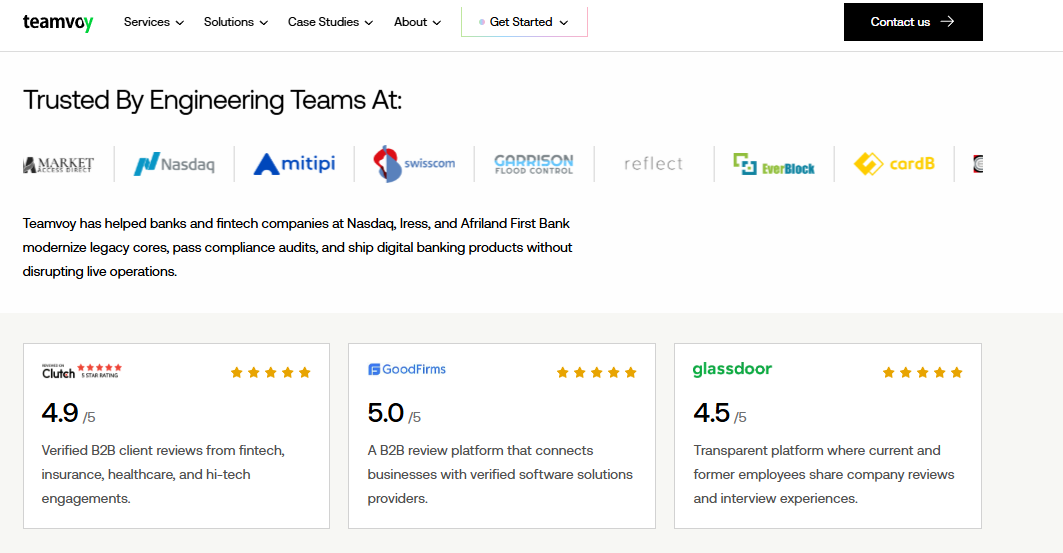
- Named regulator and standards experience: Delivery inside PSD2, DORA, PCI-DSS, SOC 2, BaFin, FCA, and GDPR scope.
- Engagement model and length: Long-term partner, four-plus year average, including a four-year build with Bitspark.
- Senior technical lead ownership: A senior engineer owns the system end to end, with the team behind them.
- Capacity to stabilise an inherited system: Core practice; engagements often begin with a platform another vendor left.
- AI integration on a live core: Data layer and legacy core assessed before any model decision.
- BC Gateways, a wealth-management private blockchain, carried from proof of concept and MVP to scale, then supported for two further years after the client was acquired by Iress.
- A four-year engagement with Bitspark, where the client’s globally dispersed team worked with Teamvoy on daily cadence.
- Market Access Direct’s system launched inside the agreed timeline with the required integrations in place.

Achievion Solutions
- Named regulator and standards experience: Not publicly claimed for PCI-DSS, PSD2, DORA, or FCA work.
- Engagement model and length: Project-and-exit, structured as POC then MVP phases.
- Senior technical lead ownership: A US-based project manager fronts delivery; engineers sit offshore.
- Capacity to stabilise an inherited system: Reviewed work is greenfield, not vendor rescue.
- AI integration on a live core: Strong on standalone models; live-core integration not evidenced.
- Delivered a POC then MVP for an AI design platform, beta tested with over 150 users.
- Built MVP, beta, and website for Health Data Select, a searchable health research dataset product.
- Delivered a Python recommendation algorithm for an education nonprofit on a roughly $50,000 budget.
Where a firm’s public record does not evidence a criterion, this guide says so plainly rather than guessing. If your own core is the constraint rather than the partner, start with the system integration layer and the hybrid cloud banking architecture pattern before shortlisting anyone.
Azumo
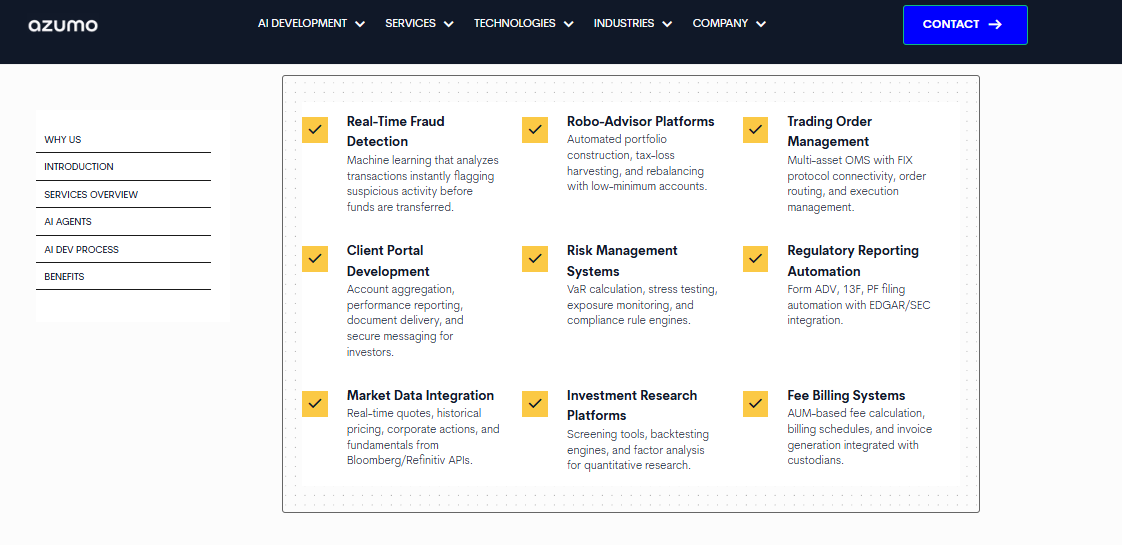
- Named regulator and standards experience: Not publicly claimed for PCI-DSS, PSD2, DORA, or FCA delivery.
- Engagement model and length: Staff augmentation, open-ended, with pods added by use case.
- Senior technical lead ownership: Azumo project managers pair with client-side managers; architecture stays client-owned.
- Capacity to stabilise an inherited system: Reviewed work builds on the client platform, not on failing legacy cores.
- AI integration on a live core: Strong at building on a given platform; core data-layer remediation not evidenced.
- Delivered conversational applications for a Fortune 100 end customer of nlx.ai, including UX and system-of-record integrations.
- Met delivery timelines across each phase of a multi-use-case programme.
- Ran regular tracking meetings between their project managers and the client’s success managers.
If capacity is the gap but ownership is not, compare this model against a scoped system integration engagement before you sign a per-engineer rate card.
DOOR3

- Named regulator and standards experience: Financial-services clients evidenced; specific PCI-DSS or DORA delivery not claimed.
- Engagement model and length: Project-and-exit phases, with design support extended afterwards.
- Senior technical lead ownership: A principal consultant leads; the accountable role is consulting, not engineering.
- Capacity to stabilise an inherited system: Reviewed work is design remediation, not production stabilisation.
- AI integration on a live core: Not evidenced in the reviewed engagement.
- Redesigned a fintech dashboard experience and cut the client’s time-to-value metric significantly.
- Ran a four-week UX audit before committing to a 12-week design engagement.
- Kept the work on deadline and on budget, tracked in Jira.
When the interface is the symptom and the core is the cause, digital product design work has to run alongside technology modernization, not instead of it.
Dualboot Partners
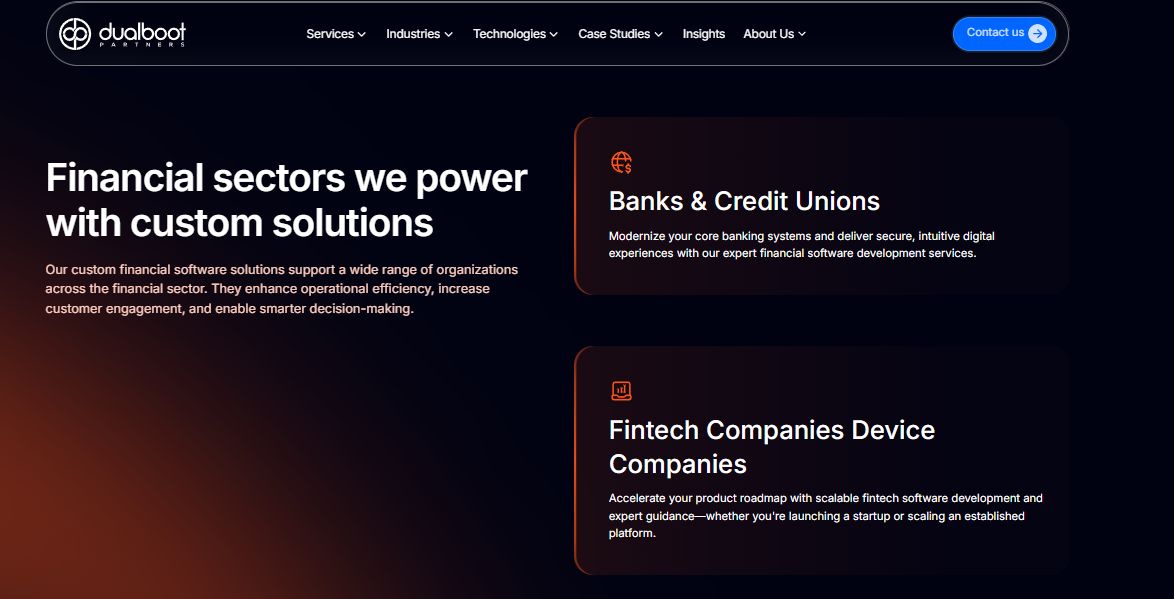
- Named regulator and standards experience: Not publicly claimed for PCI-DSS, PSD2, DORA, or FINRA work.
- Engagement model and length: Long-term partner model built around a dedicated pod.
- Senior technical lead ownership: A product owner is named; engineering accountability is shared with the client.
- Capacity to stabilise an inherited system: Reviewed work is greenfield product creation.
- AI integration on a live core: Not evidenced in the reviewed engagement.
- Ran design sprints that shaped both the first release and later iterations.
- Delivered design work that satisfied the client’s own design director.
- Partnered directly with the client’s engineering team through build and launch.
HatchWorks AI
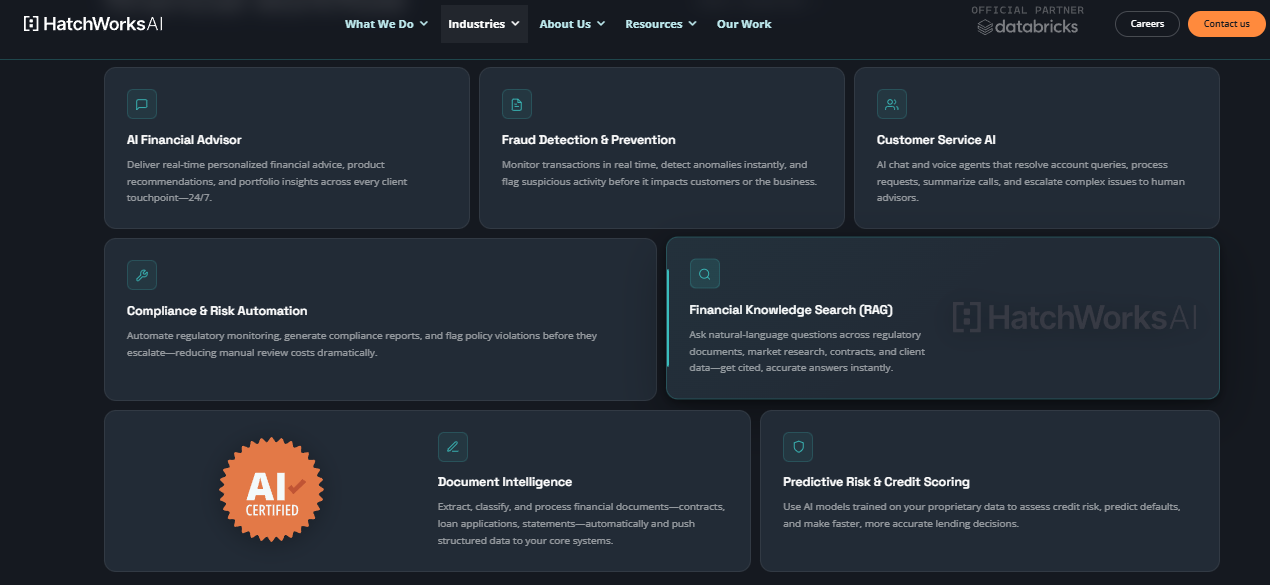
- Named regulator and standards experience: Not publicly claimed for PCI-DSS, PSD2, or DORA delivery.
- Engagement model and length: Long-term partner using nearshore pods.
- Senior technical lead ownership: Pod leads are named; system accountability generally stays client-side.
- Capacity to stabilise an inherited system: Not evidenced in the reviewed engagement.
- AI integration on a live core: Evidenced on data-heavy products, though not in regulated finance.
- Delivered AI consulting and development for Cox2M across data and analytics workstreams.
- Earned top marks on schedule and cost adherence in that reviewed engagement.
- Operates a nearshore pod model with overlapping US working hours.
Before any pod starts generating code at speed, it is worth reading how AI-assisted code introduces security risk, and what a data engineering baseline should look like first.
JetRockets
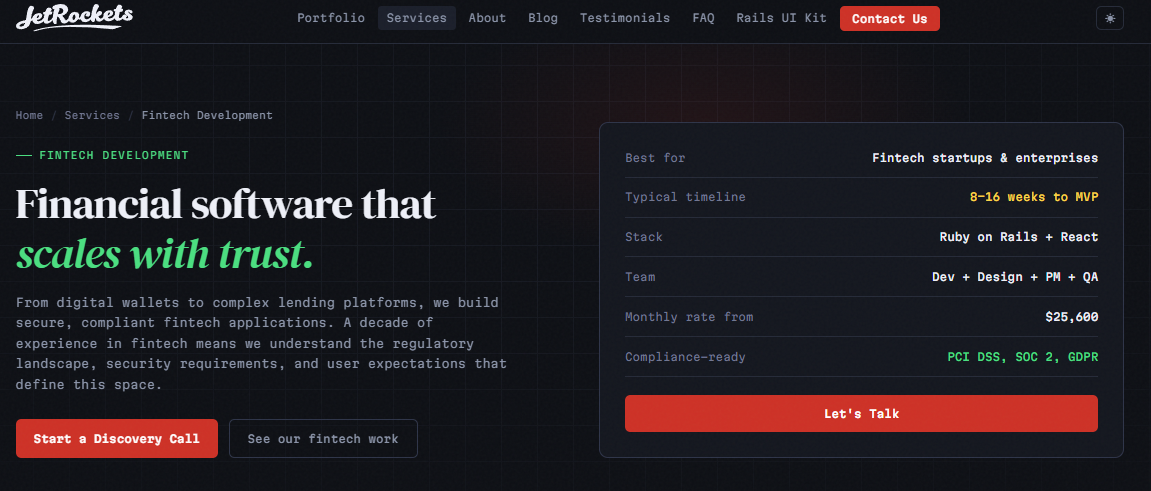
- Named regulator and standards experience: Healthcare and marketplace work evidenced; financial regulators not claimed.
- Engagement model and length: Project-and-exit, with small teams and direct founder contact.
- Senior technical lead ownership: Strong, with the company owner intervening on delivery risk.
- Capacity to stabilise an inherited system: Bug remediation evidenced, full vendor rescue not evidenced.
- AI integration on a live core: One AI-enabled coaching platform build evidenced.
- Built a web application for Preferred Solutions Healthcare with same-day bug response.
- Delivered an AI-enabled coaching platform for The Board of Life.
- One founder specifically noted never being upsold, despite many chances.
NineTwoThree AI Studio
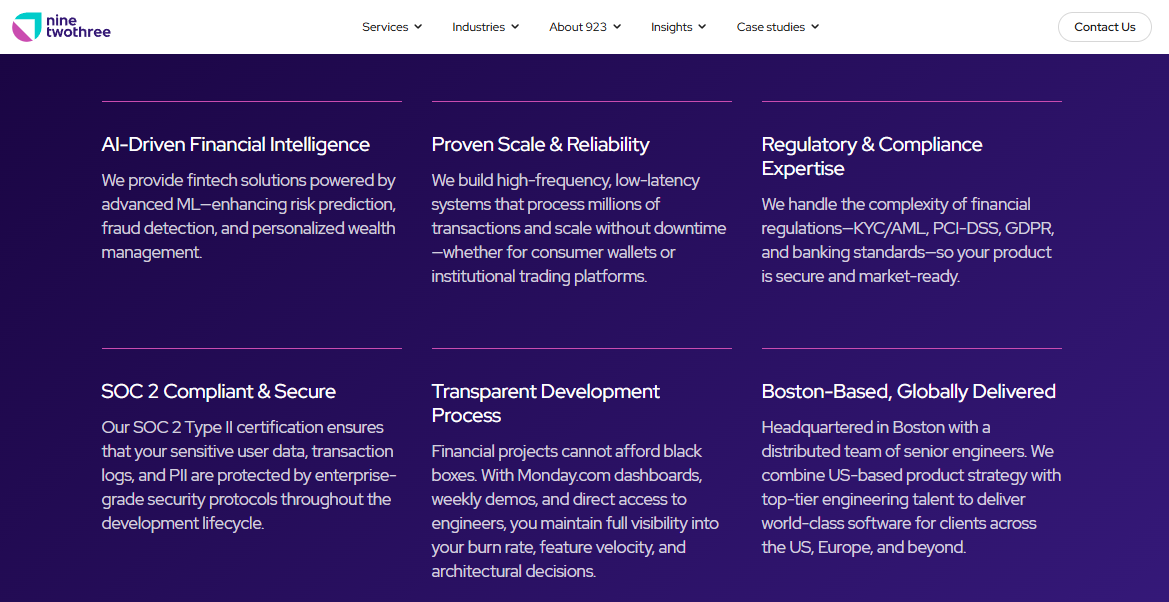
- Named regulator and standards experience: Not publicly claimed for PCI-DSS, PSD2, DORA, or FCA delivery.
- Engagement model and length: Project-and-exit on defined scope.
- Senior technical lead ownership: Varies by engagement.
- Capacity to stabilise an inherited system: Not publicly claimed.
- AI integration on a live core: Product-level AI features evidenced by the studio’s own portfolio.
- Positions itself around scoped AI and mobile product delivery.
- Publishes its own product portfolio as the primary evidence base.
- No verified client review was available in the dataset used for this guide.
A fixed-scope feature is a reasonable purchase, provided the write path is handled separately through AI integration services that treat the ledger as the constraint.
Sidebench

- Named regulator and standards experience: Not publicly claimed for financial regulators; healthcare work more visible.
- Engagement model and length: Project-and-exit, typically starting with discovery.
- Senior technical lead ownership: Varies by engagement.
- Capacity to stabilise an inherited system: Not publicly claimed.
- AI integration on a live core: Not evidenced in available material.
- Positions around product strategy and design as the entry point to delivery.
- Publishes healthcare and enterprise product work as its primary evidence.
- No verified client review was available in the dataset used for this guide.
Valere
- Named regulator and standards experience: SOC 2 readiness plausible; PCI-DSS and DORA delivery not claimed.
- Engagement model and length: Project-and-exit, extended by scope.
- Senior technical lead ownership: Varies by engagement.
- Capacity to stabilise an inherited system: Debugging on an existing product is evidenced.
- AI integration on a live core: Not evidenced in the reviewed engagement.
- Moved a client product toward an enterprise-ready release through debugging and UX work.
- Held QA and regression discipline as the release scope grew.
- Balanced product definition and deep debugging inside one engagement.
Where hardening turns into redesign, an independent IT audit answers the architecture question faster than another readiness sprint does.
Vention

- Named regulator and standards experience: Fintech clients served at scale; specific regulator delivery varies by contract.
- Engagement model and length: Staff augmentation, scaling to multiple dedicated teams.
- Senior technical lead ownership: Delivery managers are provided; system ownership usually stays client-side.
- Capacity to stabilise an inherited system: Possible with enough allocated engineers, though not the stated focus.
- AI integration on a live core: Capacity available; the assessment work generally sits with the client.
- Delivered staff augmentation plus custom development for an AI company, rated 5.0 by its CTO.
- Operates multi-team programmes with formal delivery management layers.
- Maintains a large engineering bench across regions.
⭐ How this roster was assessed
No numeric scores appear anywhere in this guide, and that is deliberate. A firm with nine verified reviews and one with seventy are not comparable on stars, so I used verified engagement detail instead: what was built, who sponsored it, what it cost where disclosed, and what the client named as the weak spot.
Where a firm’s public record does not evidence a criterion, this guide says so plainly rather than guessing. Absence of a claim is not a failure, but it is information you should have before a multi-year commitment.
Teamvoy sits first in this list because the article’s territory, regulated platforms modernised while live, is the work we do daily across 150+ delivered projects and a 4+ year average engagement. That placement is a statement of fit, not of rank, and several firms above will beat us on speed for a greenfield MVP. The trade surveillance re-engineering work for a global exchange and our read on the tech debt avalanche show what that territory looks like in practice.
Q2. What Does Fintech Application Development Cover, and Which Rules Apply to Your Product Type?
Fintech application development is the design and engineering of regulated financial software, covering payments, neobanking, lending, and wealth, where compliance frameworks such as PCI DSS 4.0.1, DORA, and PSD2/PSD3 shape the architecture from day one rather than being added before launch. The mobile client is the smallest part of the build.
Start at the ledger, not the interface
The screen is what your investors see. The ledger is what your auditor sees. A fintech application is really four layers stacked on each other: the client, the service layer, the ledger, and the integration surface to banks, card networks, and identity providers.
Teamvoy starts fintech engagements at the ledger and integration surface, which is where BC Gateways, a wealth-management private blockchain platform, was carried from proof of concept to scale and then supported for two further years. We learned there that data shape decides everything downstream.
⚠️ One wallet top-up, four systems
Picture a user adding fifty euros to a wallet. That single tap crosses a payment gateway, a fraud check, your ledger, and a reconciliation job. Each hop can fail differently, and only one of those failures shows up in the app.
The category obsesses over the model or the framework while ignoring the integration layer. Integration is the part that decides whether a payment lands twice, once, or never. Silent failures are the expensive kind, and browser-specific auth bugs are a good example: a token exchange that assumes local storage works fine in Chrome and fails quietly in Safari private browsing. That is why system integration work carries more risk than the interface layer above it.
Which rules apply to which product
| Product type | Core compliance surface | What it forces into the build |
|---|---|---|
| Payments and wallets | PCI DSS 4.0.1, strong customer authentication | Cardholder data scope decisions, script controls, tokenisation |
| Neobanking on a BaaS partner | Partner bank rules, DORA (EU), GDPR | Partner reporting hooks, incident paths, ICT records |
| Lending | Local credit and consumer rules, KYC/AML | Decision audit trails, adverse-action logging |
| Wealth and investing | MiFID II (EU), SEC and FINRA (US) | Suitability records, immutable transaction history |
✅ Two PCI clauses that change your pipeline
PCI DSS v4.0.1 has been fully mandatory since 31 March 2025, with no grace period. Requirement 6.4.3 wants an authorised inventory of every script on your payment page. Requirement 11.6.1 wants tamper detection running at least every seven days.
Read those as build tasks, not paperwork. Teamvoy treats audit evidence as a delivery artifact, produced during the sprint rather than assembled the month before an assessment, which is the same discipline our banking and fintech engagements run on.
The moving target in 2026
DORA has applied to EU financial entities since 17 January 2025, covering ICT risk, incident reporting, resilience testing, and third-party risk. PSD3 and the Payment Services Regulation are agreed but not yet published in the Official Journal. The Council’s April 2026 note points to application roughly 21 months after entry into force.
So a roadmap written today should hold space for changes that are not law yet. Where my view sits right now is that most teams over-plan for PSD3 features and under-plan for DORA evidence.
Teamvoy delivers inside BaFin, PSD2, DORA, SOC 2, PCI-DSS, FCA, and GDPR scope across banking, insurance, and complex SaaS. That experience is why our first two questions on any fintech build are the data layer and the legacy core, the same starting point described in our guide to building regulator-ready AI in fintech.
Q3. How Do You Vet and Contract a Partner Under DORA’s Third-Party Rules?
Under DORA your development partner becomes a recorded ICT third party. Require audit rights, sub-outsourcing disclosure, an exit strategy, incident-reporting cooperation, and participation in resilience testing, in the contract rather than the pitch deck. Ask for register-of-information fields before the SOW. A partner who cannot answer has already answered.
Where diligence actually breaks
Procurement usually finds the gap late. Someone starts assembling the register of information, then discovers the contract has no audit clause and no exit plan. By then the vendor holds your ledger knowledge.
Teamvoy has signed regulated contracts for twelve years, and the two clauses I see missed most are exit strategy and sub-outsourcing disclosure. Security questionnaires get filled in carefully. Those two get waved through.
⚠️ Almost right is the expensive answer
A vendor that is completely wrong on compliance gets caught in week one. A vendor that is almost right passes review, ships, and sits in your estate for months. The cost of correcting it compounds quietly.
The regulator side is now concrete. The European Supervisory Authorities designated the first critical ICT third-party providers in November 2025, using published criticality criteria. Threat-led penetration testing recurs every three years for in-scope entities, and your ICT providers have to take part.
Seven clauses to require
- Audit and inspection rights for you and your regulator.
- Full sub-outsourcing disclosure, with approval required for changes.
- A written exit strategy, including code, data, and documentation handover.
- Incident notification timelines that match your own reporting duties.
- Cooperation in resilience and penetration testing.
- Named key personnel, with notice periods on replacement.
- Data location and processing terms that survive a subprocessor change.
Teamvoy accepts client audit and delivery processes as part of the engagement rather than as an exception. Ask us for the register fields during scoping, before anyone signs, or start with an independent IT audit of what you already hold.
❌ Five answers that should end the conversation
- “We follow all major frameworks” with no named engagement behind it.
- “Exit is straightforward” with nothing written down.
- Sub-contracting that only surfaces when you ask twice.
- The architect on the pitch call who will not be on the project.
- Compliance described as documentation rather than engineering.
Eligibility is not compliance. A firm can qualify for the shortest self-assessment route and still miss the controls underneath it. The same test applies when you choose an AI vendor for fintech, where framework logos often stand in for named delivery.
What client-side evidence looks like
Reviews are useful here, though not for the star rating. Look for reviewers who mention process adherence, because that is what an audit actually tests.
We were impressed with the technical management, adherence to process, and technical capability of the engineers.
Teamvoy works best where accountability is contractual rather than assumed, which is why a senior engineer owns the system end to end. That model exists because handoffs are where regulated delivery fails, as the trade surveillance re-engineering for a global exchange shows.
Q4. What Should a Fintech Build Cost, How Long Does It Take, and Why Do Estimates Conflict?
Published 2026 estimates for a fintech MVP run from 8,000 to 350,000 US dollars because each source scopes compliance differently. An unregulated MVP takes roughly two to four months, KYC/AML pushes it to three to six, and enterprise builds run nine to eighteen. Budget by regulatory surface, meaning PCI level, licensing path, and KYC provider, not by feature count.
The published ranges do not agree
| Published 2026 estimate | Stated scope |
|---|---|
| 8,000 to 200,000 plus | Lean payment MVP through full neobanking platform |
| 50,000 to 90,000 | Fintech MVP, security-weighted budget |
| 80,000 to 500,000 plus | CTO-facing guide including PCI architecture and KYC flows |
| 150,000 to 350,000 | Regulated MVP, licensing assumed in scope |
Nobody is lying. Each number answers a different question about compliance scope.
💰 PCI level is the real cost driver
Compliance cost tracks transaction volume, not feature count. Published breakdowns put Level 4 around 5,000 to 10,000 dollars, Level 3 near 10,000 to 25,000, Level 2 near 20,000 to 50,000, and Level 1 at 50,000 to 200,000 plus with an on-site assessor. Annual penetration testing adds roughly 15,000 to 25,000 dollars.
Teamvoy scopes fintech work against regulatory surface first, which is why clients including Bitspark and Iress extended into multi-year engagements rather than re-procuring after phase one. Scope drift is cheaper to prevent than to absorb, and the same logic drives our IT cost optimization work.
How to normalise two quotes
Ask both vendors the same four questions before comparing prices. Which PCI self-assessment route do they assume? Who owns KYC vendor integration? Is reconciliation in scope? Who produces audit evidence?
⏰ Timelines, and the outsourcing question
Unregulated MVPs land in two to four months. Add KYC and AML and it becomes three to six. Enterprise platforms run nine to eighteen months.
Nearshore and offshore teams in Eastern Europe or Latin America typically cost two to three times less than equivalent US in-house hiring. The saving disappears if domain inexperience creates compliance rework. Rate is the visible number, and rework is the one that hurts.
⚠️ Two hidden line items
Free AI-generated code is the most expensive debt a fintech team can take on. Suppressed errors surface later, usually during an audit or an incident, which is the pattern behind the tech debt avalanche.
The second is token billing on AI features. Agent frameworks resend the whole accumulated log on every turn, so consumption grows quadratically rather than linearly. One unattended retry loop ran roughly 4,200 dollars overnight before anyone noticed. Our AI integration cost guide breaks down where that spend actually lands.
Phase the budget to the capital climate
Global fintech funding was 12.1 billion dollars in Q1 2026, down 37.3 percent quarter on quarter, then 14.5 billion in Q2. European volumes hit a four-year high in that second quarter.
That argues for a phased build with a working first milestone, not a full custom platform funded on optimism. I could be wrong on the timing, but the pattern I see is money returning to teams with a live system.
Their technical expertise was top class.
Teamvoy runs a three-to-five day AI and System Readiness Audit and a two-week Sharp Sprint for teams that need a costed plan before committing capital. A sprint ships a meaningful first milestone, not a finished product, and I would rather say that upfront. The AI modernization sprint model explains what fits inside those two weeks.
Q5. Should You Build Custom, Compose on Providers, or License a White-Label Core?
Compose on licensed providers unless your core logic is genuinely differentiated. Custom build suits novel products and unusual compliance shapes, while white-label suits speed to a proven pattern. Build the integration layer yourself only with a dedicated platform team, because otherwise you own every API schema, field mapping, auth flow, and retry policy permanently.
The same features, twice the price
Two teams can ship an identical feature list and pay wildly different amounts. The gap is almost never rate. It is how much infrastructure they decided to own.
Published 2026 guides put the swing at roughly two times for the same scope. That variance lives in the architecture decision, not in the sprint velocity.
💰 The three paths, honestly
| Path | Fits when | Real cost you accept |
|---|---|---|
| Custom build | Core logic is your product, or compliance shape is unusual | Longest timeline, full ownership of every integration |
| Compose on providers | Standard payments, KYC, and card issuing needs | Vendor roadmaps, per-transaction fees, upgrade churn |
| White-label core | Speed to a proven pattern, thin differentiation | Someone else’s data model and release schedule |
Composing is the right default for most teams. Custom is right when a provider would force you to distort the product.
Where composing actually breaks
Composition fails in two specific places. The first is a non-standard core banking system that does not expose the fields your provider expects. The second is an unusual licensing path, where the provider’s compliance model does not match your permission.
When either applies, you are writing adapters anyway. At that point, custom build stops being expensive and starts being honest, and the work becomes a system integration problem rather than a procurement one.
⚠️ White-label means inheriting a roadmap
A licensed core gets you live fast. It also hands you a data model you did not design and a release schedule you do not control. Every feature request queues behind other customers.
I have watched teams pick white-label for speed, then spend year two building around the parts they cannot change. That is a fine trade if you made it deliberately, and a proof of concept is the cheapest way to test it before committing.
The integration layer trap
This is where most fintech budgets quietly leak. Own the integration layer and you become responsible forever for every schema, mapping, auth flow, and retry policy. Build it only if you have a dedicated platform team and genuinely unique core systems.
The protocol question underneath it is unsettled. One camp argues that agent-to-agent approaches give production-grade scope control, while another argues the Model Context Protocol wins first because it solves the dull problem of exposing existing applications as APIs. I would not bet an architecture on either winning.
❌ What I would not do
Do not pick a path because a vendor’s pricing page is clearer. Do not treat the integration layer as plumbing to be sorted later. Most fintech failures I see are integration failures wearing an AI costume.
The useful question is narrow. Which single component, if a provider owned it, would stop you from shipping the thing that makes you different?
Teamvoy builds custom integration layers only where the core is genuinely non-standard, and says so during scoping rather than after the first invoice. Across 150+ delivered projects, the honest answer has often been that composing beats building, as the hybrid cloud internet banking architecture work shows.
Q6. Why Do Fintech AI Features Stall Before Production, and What Makes Write-Access Safe?
Most fintech AI pilots stall because they were built as read-only assistants and cannot be trusted with write-access. Roughly 95 percent of enterprise generative AI pilots have returned no measurable dollar. Write-access requires idempotency, hard circuit breakers, token budgets, immutable audit logs, and a human approval gate on any ledger-affecting action.
The read-only ceiling
Almost every stalled pilot I have seen shares one shape. It answers questions about the system and never touches it. That is a wiki with better manners.
The value sits on the other side of that line, in provisioning, KYC checks, and ledger updates. Crossing it is an engineering problem, not a model problem, which is why AI agent development in finance starts with the write path.
💸 What an unsupervised agent costs
One documented incident says it plainly. An agent hit an infinite retry loop with a CRM tool, repeated the same broken call for six hours overnight, and ran up around 4,200 dollars because nothing stopped it. There was no hard circuit breaker.
Token billing makes this worse than it looks. Agent frameworks resend the whole accumulated log every turn, so consumption grows quadratically rather than linearly.
The pattern that turns dangerous
Security researchers call it the lethal trifecta. It appears when an agent has read access to sensitive data, processes untrusted external content, and holds an outbound channel. In fintech, all three arrive together by default.
Teamvoy assesses the data layer and the legacy core before anyone picks a model. That order sounds slow until the first audit question lands.
✅ Five controls before write-access
- Idempotency keys on every write, so a retry cannot double-post.
- Hard circuit breakers with spend and call ceilings, enforced outside the agent.
- Immutable audit logs recording the input, the action, and the decision path.
- A human approval gate on anything that moves money or changes entitlements.
- Scoped credentials per action, never a shared service account.
None of that is exotic. It is the same discipline any payment integration already needs, and the same baseline behind autonomous agent workflows that survive review.
What we got wrong about context
Loading more context felt like the obvious fix. It is not. Practitioners report that around the 40 percent mark of a context window, roughly 168,000 tokens in a large model, output quality starts degrading rather than improving.
Dumping every document into a vector store made this worse. You get thrashing and context flooding, not reasoning, and in a regulated setting that becomes a compliance liability. Fixing it is data engineering work before it is model work.
⚠️ Where my view is still moving
Teamvoy has run enough of these integrations to be confident about the write path, and less confident about how much autonomy is safe long term. My instinct says the useful ceiling for now is propose-and-approve, not act-and-report.
I could be reading that too conservatively. The teams shipping fastest are the ones who narrowed the agent’s job to one workflow with a hard boundary.
Teamvoy integrates AI on live financial stacks by fixing the data layer and the write path first, which is the difference between a demo and a system an auditor accepts. That work is slower than a model demo suggests, and I would rather say so before the contract. Our AI integration services are scoped that way on purpose.
Q7. How Do You Stabilise an Inherited or AI-Built Fintech System Without a Rewrite?
Stabilisation starts with reading and documenting what exists, not replacing it: a dependency map, a test harness around money-movement paths, then incremental extraction. AI-generated pull requests average 10.8 issues against 6.4 for human-written code, so the first job is finding suppressed errors. Cutovers fail on latency and undocumented knowledge, not data.
The velocity collapse
The story arrives in the same shape most times. Traction was real, the team shipped fast with AI-assisted tooling, and then progress stopped. Nobody can safely change the payments module.
A vibe-coded fintech MVP is closer to a building finished without the inspector signing off than to a buggy beta. It works until someone checks, which is exactly the pattern described in our breakdown of vibe coding security risks.
❌ Suppressed, not fixed
One engineer opened a pull request that looked clean, then read the lines. Eleven ESLint disable comments sat in a single file. The tool had not fixed the type errors it found, it had silenced them.
Scale that up and the numbers get uncomfortable. In one scan of 5,000 vibe-coded applications, 60 percent were vulnerable.
What actually breaks at cutover
Data migrates fine, usually. The failure is elsewhere. A database cutover can succeed while the application gridlocks, because a synchronous write across two availability zones adds two milliseconds per commit until the connection pool empties. That is a cloud optimization question disguised as a migration question.
The other failure is knowledge nobody wrote down. One on-call engineer asked an AI tool about a 503 error and got told to restart the server six times. A senior human took thirty seconds to name the real cause, a batch job filling the connection pool.
✅ The stabilisation runbook
- Map dependencies before changing anything, including scheduled jobs.
- Wrap the money-movement paths in tests first, not the UI.
- Run a scream test: isolate suspected dead services for 48 to 72 hours and see who screams.
- Inject test orders through a QA account right after cutover, then check billing and webhook integrations.
- Extract one component at a time, strangler-fig style, leaving the old path live until the new one proves itself.
- Gate every pull request on three questions: does it reuse, does it follow conventions, and can the developer explain it without the AI’s comments?
Teamvoy modernises systems the way you renovate an occupied building, which is how BC Gateways stayed live through a company acquisition and two further years of scale. Identical screens on top, different tables underneath, normalised one at a time. That is the same technology modernization sequence we run on regulated cores.
⏰ What stabilisation does not mean
It does not mean the rewrite disappears forever. Sometimes one bounded component genuinely needs rebuilding, and pretending otherwise wastes a year. Naming that early is cheaper than discovering it in month eight.
If nobody left on the team can explain the payments module, start with the recovery plan for systems nobody understands before scoping any build work.
I can confidently say that we would not be where we are today without Teamvoy's support.
The care and interest they showed are what makes Teamvoy special.
The question I am still sitting with is whether AI tooling makes rescue work more common or just faster to reach. My guess is more common, because plausible code passes review more easily than broken code does. If you are holding a system like that, I would rather hear about it early than at 2 AM.